
Is Sumo Fixed? What the Evidence Actually Shows
Short answer: Some professional sumo bouts have been fixed, and this is documented, not rumour. In 2011 a police investigation uncovered text messages that revealed bout-fixing, 23 wrestlers were judged guilty and expelled, and the Japan Sumo Association cancelled a Grand Tournament. An academic study published in 2002 had already found a statistical pattern consistent with rigging in one specific situation. Neither the scandal nor the study shows that every bout is fixed, and no source cited here measures what share of all bouts were ever affected.
"Is sumo fixed?" is one of the most common questions visitors ask, and the honest answer has three parts: what was proven, what was alleged, and what changed afterwards. This guide separates them, names the source for each claim, and says where the evidence stops.
In this guide
- What does "fixed" mean in sumo?
- What did the 2002 economics study find?
- What happened in the 2011 scandal?
- What had been alleged before 2011?
- What changed after the scandal?
- So are sumo bouts fixed today?
- Frequently asked questions
- Sources and notes
What Does "Fixed" Mean in Sumo?
Japanese uses two different ideas, and mixing them up is the source of much confusion.
- Yaocho (八百長) is the word for bout-fixing: a bout whose result was arranged in advance, usually in exchange for something of value.
- Muryoku-zumo (無気力相撲), often translated "lethargic sumo," is a different thing. A wrestler goes easy on an opponent without any money changing hands, and the bout looks half-hearted. Wikipedia's entry on match-fixing in sumo describes the two separately for this reason.
When people say sumo is "fixed," they usually mean the first. When a bout simply looks flat, the second may be what they are seeing. Only the first involves a payment.
What Did the 2002 Economics Study Find?
In 2002 the economists Mark Duggan and Steven Levitt published "Winning Isn't Everything: Corruption in Sumo Wrestling" in The American Economic Review. It is the most cited statistical analysis of the question, and its design is worth understanding because it explains why one kind of bout attracted attention.
In sumo, a wrestler who finishes a 15-bout tournament with a winning record is promoted, and one with a losing record is demoted. That makes the last day uneven. A wrestler with seven wins and seven losses who needs one more win has far more to gain than an opponent who already has a secure record.
According to the study's abstract and Wikipedia's summary of it:
- Wrestlers on the 7-7 "bubble" win a disproportionate share of their final bouts. Wikipedia reports the figure as about 80%, against a predicted 48.7%.
- The effect is stronger when the two wrestlers have met often before.
- In the rematch at the next tournament, the wrestler who won on the bubble loses more than expected. Wikipedia reports about 40% wins. The authors read this as repayment of the favour.
- The pattern weakens in a wrestler's final year, which fits the authors' game-theory predictions.
- After media allegations of rigging, the bubble win rate fell to about 50%, and the authors report that the effect disappears during periods of heightened media scrutiny.
- Differences across stables suggest that stables help facilitate the arrangements.
The authors concluded that there was strong statistical evidence of match rigging, driven by the gains from trade between a wrestler who needs a win and an opponent who does not.
The limits matter. The study is about matches among the highest-ranked wrestlers, and about the bubble in particular. It does not claim that most bouts are fixed, and an abstract cannot tell us the share of all bouts affected.
What Happened in the 2011 Scandal?
The study was a pattern in the numbers. The 2011 scandal was direct evidence.
- February 2011. Police investigating illegal gambling on professional baseball found mobile phone text messages that implied sumo bouts had been thrown. The Japan Times reported that 13 people were initially implicated and that the JSA's own probes pointed to a 14th.
- Admissions. Juryo wrestler Chiyohakuho admitted fixing matches and offered to quit. Wrestler Enatsukasa and an elder, Takenawa, admitted involvement, according to the same report.
- Cancellation. The JSA cancelled the March 2011 Osaka Grand Tournament. The Japan Times described it as the first time the association had cancelled a tournament over a scandal. The 1946 summer meet had been scrapped for a different reason: delayed renovation work at the Ryogoku Kokugikan. A regional exhibition scheduled for 8 August 2011 in Akita Prefecture was also cancelled.
- Public reaction. The broadcaster NHK cancelled a charity sumo event and considered dropping live coverage of the spring tournament, the Japan Times reported.
- Outcome. In total, 23 wrestlers were judged guilty and expelled. Twenty-one admitted involvement. Two, Hoshikaze and Sokokurai, never did and were expelled after refusing to submit resignation papers, according to Wikipedia's summary.
- May 2011. The JSA's investigative panel said match-fixing appeared widespread and that its full extent would be hard to determine. The May tournament was held as a "Technical Examination Tournament," without prize money or trophies.
- Afterwards. Hoshikaze lost his court challenge, with his final appeal denied in October 2013. Sokokurai won his case, the JSA did not appeal, and he returned to the ranking list for the July 2013 tournament at his previous rank.
The 2011 case is therefore both a confirmation and a limit. It confirms that fixing happened and that the sumo association itself acted on the evidence. It also shows that the panel regarded the true extent as hard to establish.
What Had Been Alleged Before 2011?
Accusations were not new in 2011. Wikipedia and the Japan Times list several, with an important difference between a claim and a proven fact:
- Late 1980s and 1990s. The weekly magazine Shukan Gendai published a series of articles alleging fixed bouts.
- 1996. A former stablemaster alleged in a weekly magazine that sumo was rife with fixed bouts. The JSA called the accusations "scurrilous lies," according to the Japan Times.
- 2000. Former komusubi Keisuke Itai said he had rigged bouts during his career from 1978 to 1991. Wikipedia reports that he claimed up to 80% of bouts were fixed, which is a claim and not a finding.
- 2007. Shukan Gendai reported that yokozuna Asashoryu paid wrestlers to lose to him. A court later ordered the publisher, Kodansha, to pay the JSA 44 million yen, according to Wikipedia.
The pattern is that allegations were repeatedly denied or lost in court until the 2011 text messages supplied evidence that could not be dismissed.
Why Does the Incentive Exist in the First Place?
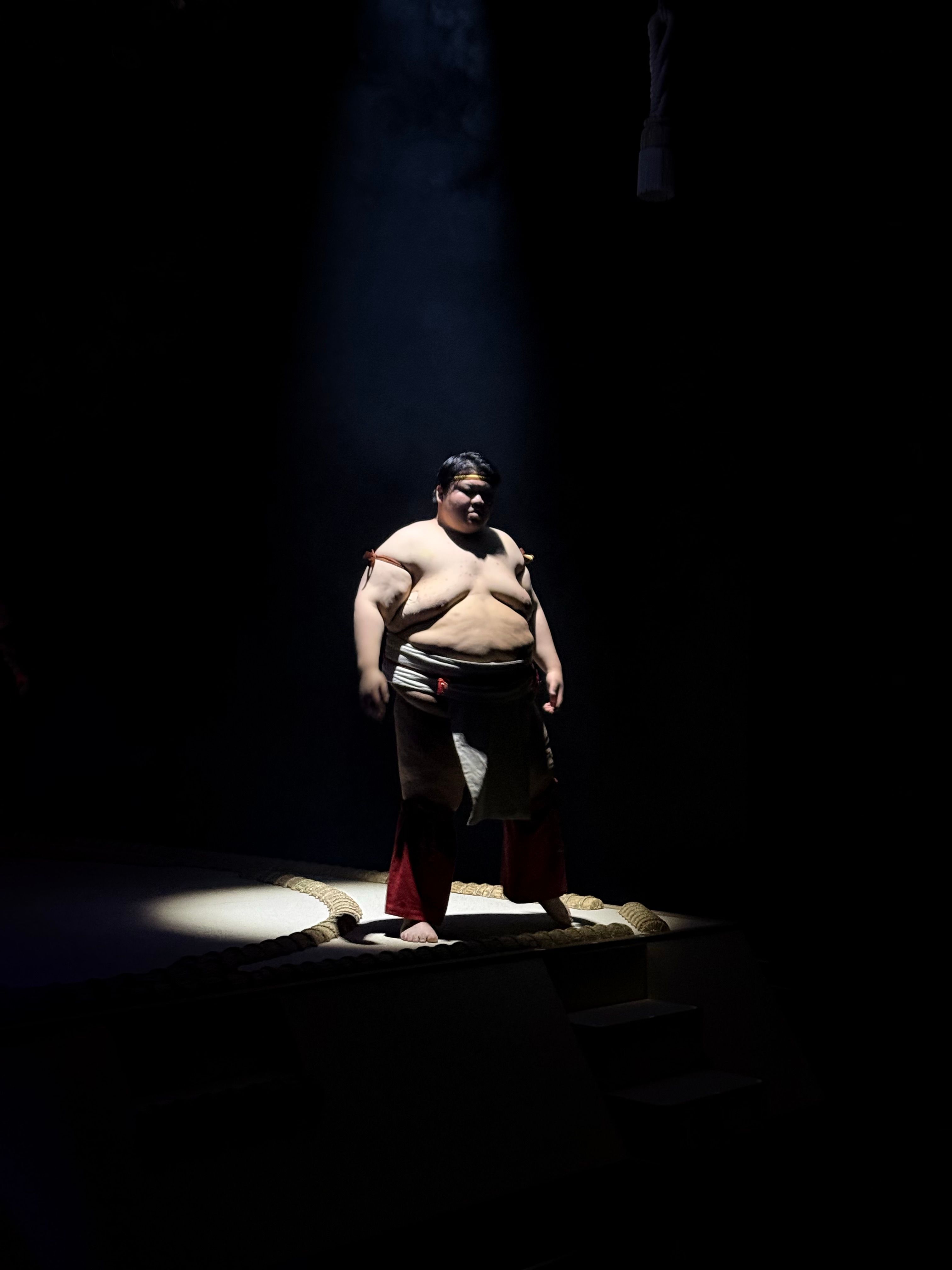
The study's argument depends on how sumo pays and ranks its wrestlers, and the Japan Sumo Association (JSA) and Web Japan describe that structure.
- Rank decides pay. Web Japan explains that sekitori (the juryo and makuuchi divisions) receive a monthly salary, while the wrestlers below them receive only a small allowance. Rank is therefore not only status. It is the line between a salary and an allowance.
- Rank is rewritten after every tournament. The JSA revises the banzuke after each Grand Tournament according to results, so a single win can move a wrestler up or down.
- The figures are large at the top. A July 2026 report in Daily Sports gives the current monthly salary as 3,000,000 yen for a yokozuna and 2,500,000 yen for an ozeki, with the makuuchi championship prize set to double from 10,000,000 to 20,000,000 yen from January 2027.
- A winning record is a simple threshold. In a 15-bout tournament a majority of wins means eight, which is why the 7-7 position is the pressure point in the study.
None of this proves anything about any particular bout. It explains why economists looked at the final day: the payoff is lopsided there, and lopsided payoffs are where rigging, if it exists, is most likely to appear.
How Strong Is Each Piece of Evidence?
Different kinds of evidence support different conclusions. Laying them side by side shows what each can and cannot establish.
Evidence | What it shows | Limits |
|---|---|---|
2002 Duggan and Levitt study | A statistical pattern consistent with rigging among top wrestlers on the 7-7 bubble | Cannot identify a specific bout, and does not measure the share of all bouts |
2011 text messages | Direct evidence that specific bouts were discussed and arranged | Covers the people involved in that investigation. The JSA panel said the full extent was hard to determine |
Admissions in 2011 | Three people admitted fixing, according to the Japan Times, and 21 in total admitted involvement, according to Wikipedia | Admissions come from the wrestlers and elders who were investigated |
2011 expulsions | The association judged 23 wrestlers guilty | Two of the 23 never admitted involvement, and one of them, Sokokurai, won his court case and was reinstated |
Magazine allegations, 1980s to 2007 | That claims circulated for decades | Allegations, not findings. In 2007 a court ordered the publisher of one of the claims to pay the JSA 44 million yen |
Former wrestler's claim, 2000 | A former komusubi said he rigged bouts in his own career | A personal account. The figure of up to 80% of bouts is his claim, not a measured rate |
A careful reader can hold all of this at once: the question was real, some of it was proven, and some of it was never more than assertion.
What Changed After the Scandal?
Wikipedia reports that an eight-member committee proposed six recommendations in March 2011, later expanded to eight, covering:
- investigations of suspected cases,
- rules for the dressing rooms,
- an anonymous reporting hotline,
- discipline for lethargic sumo,
- training for stable owners and wrestlers,
- pay protection for injured wrestlers, and
- efforts to restore competitive spirit.
This guide cannot judge how well each reform has worked. The sources describe the recommendations and the expulsions but do not evaluate the results.
So Are Sumo Bouts Fixed Today?
The accurate answer is that the evidence shows fixing occurred, concentrated around the promotion threshold, and that the sport has been under heavier scrutiny since 2011. It does not show that a bout you watch today is fixed, and it does not show the opposite either.
Three points help a viewer keep this in proportion:
- The evidence is about incentives. The study identifies a specific moment where one wrestler's gain is large and the other's cost is small.
- The scandal was punished. A large group of wrestlers was expelled, a tournament was cancelled, and the association adopted reforms.
- Judges and referees can intervene. The JSA describes five shimpan (judges) who sit around the ring and can overrule the referee or order a rematch.
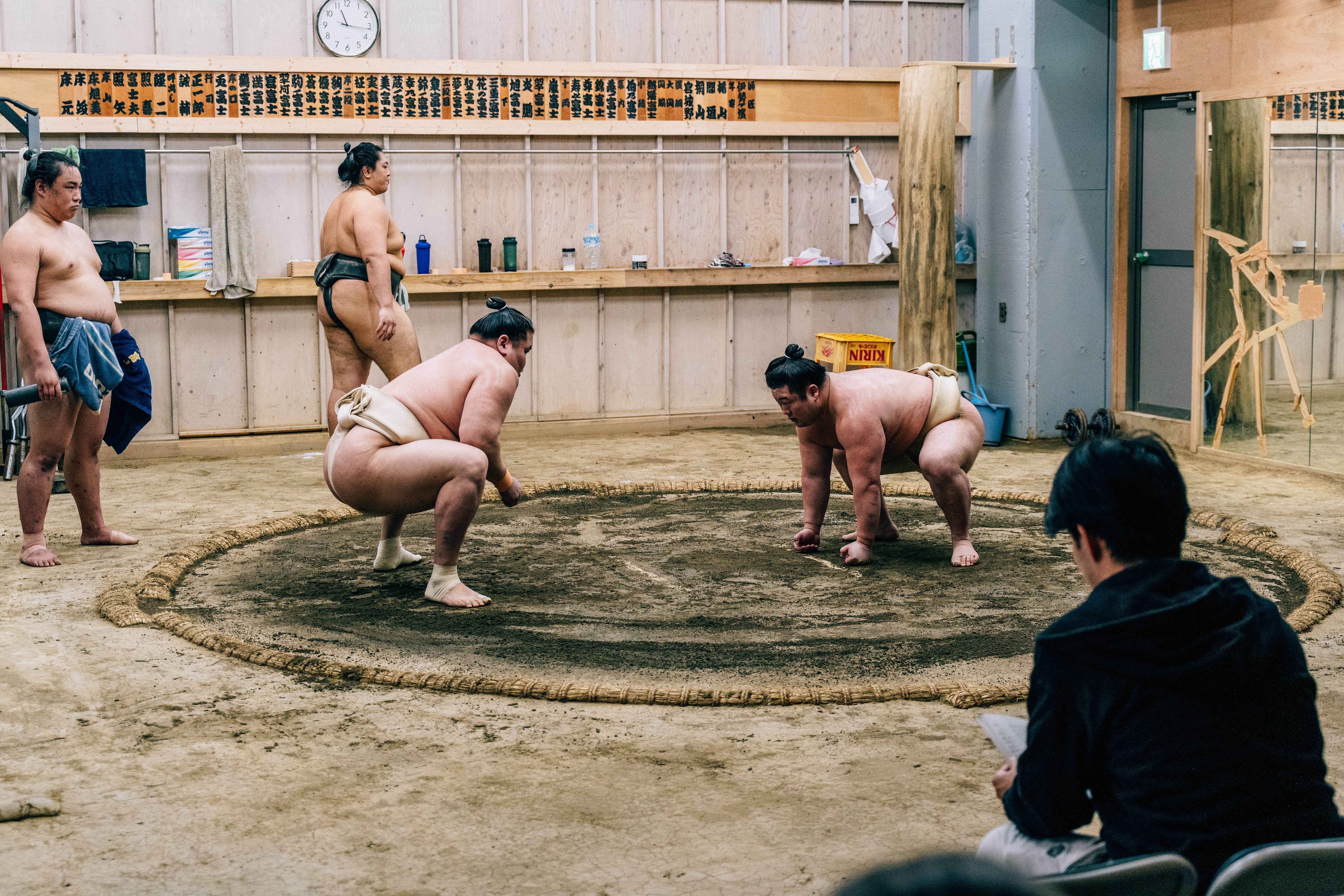
If you are watching in person, what you see is real physical competition between very heavy athletes, in a sport where the stakes are rank and income. That is a reason to follow the result closely, whatever the history.
How Does the Association Decide a Disputed Bout?
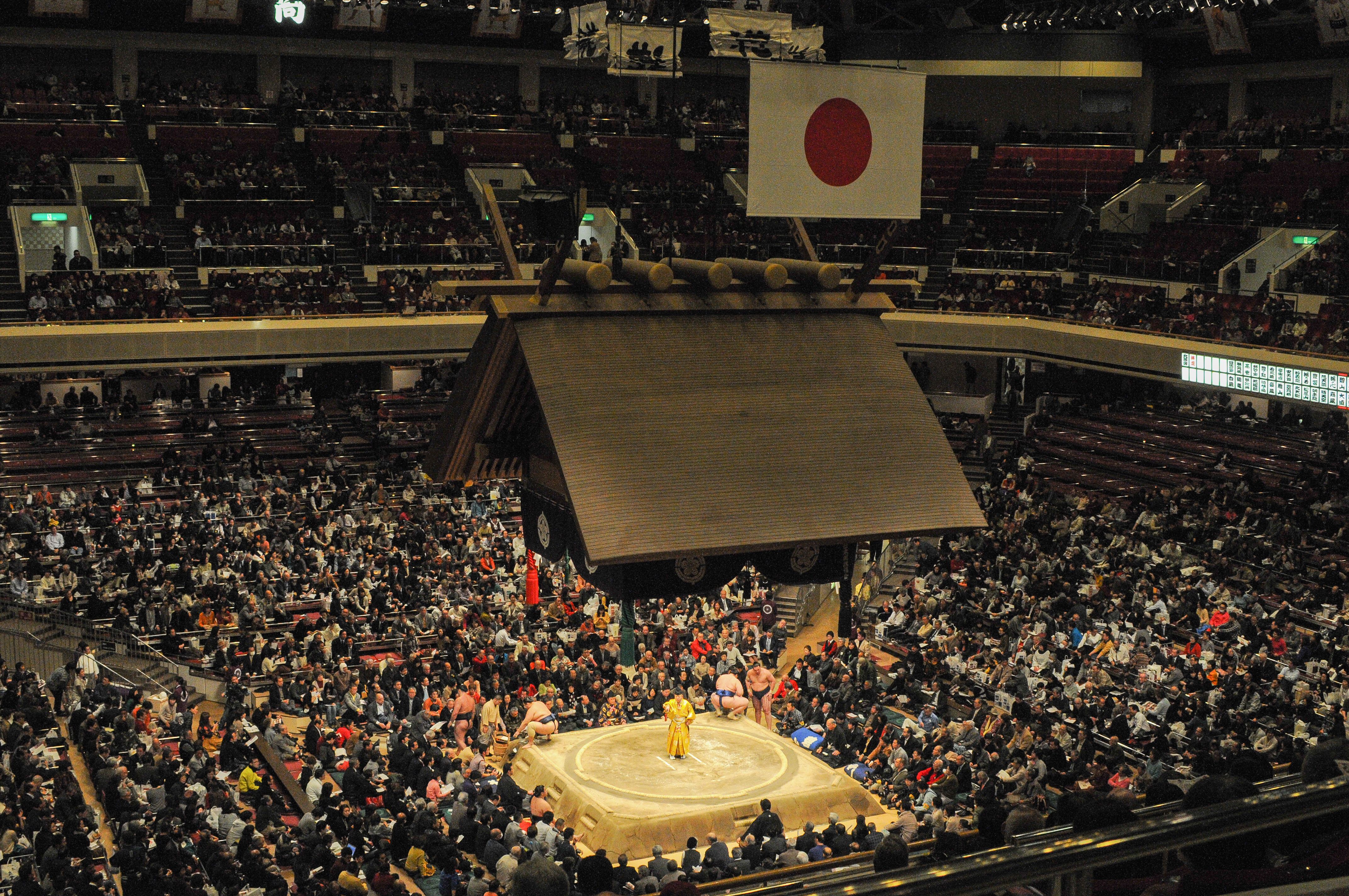
Fixing is about results arranged in advance. A separate question is how an honest result is confirmed, and the JSA's English introduction describes the system. The gyoji (referee) calls the bout. Five shimpan (judges), who are former rikishi chosen by the association's elders, sit around the ring and can overrule the gyoji or order a rematch. A bout is won by forcing the opponent out of the inner circle or throwing him down in the ring, and any body part other than the soles of the feet touching the ground loses it.
These rules are simple on purpose, so a result can usually be read from the ring. That does not rule out an arrangement made before the bout, which no judge at ringside can detect. It does mean that a result in the ring is a real physical result, whatever happened beforehand.
What This Guide Does Not Claim
To keep the evidence in proportion, here is what the sources do not say:
- They do not say that most bouts are fixed, or that any particular recent bout was.
- They do not say that every wrestler expelled in 2011 was equally involved, and two of the 23 never admitted involvement.
- They do not say how many bouts were affected before 2011. The JSA's own panel said the full extent would be hard to determine.
- They do not measure whether the situation has improved since the reforms, only that the reforms were recommended.
Readers who want to check the claims can start from the primary paper, the NBER working paper listed in the sources.
Frequently Asked Questions
Is sumo fixed?
Some bouts have been fixed. In 2011, 23 wrestlers were judged guilty of involvement in fixing and expelled, and the March tournament was cancelled. No source shows that all bouts are fixed, and none measures the share affected.
What is yaocho in sumo?
Yaocho (八百長) is bout-fixing: a bout arranged in advance, normally in exchange for something of value. It is different from muryoku-zumo, where a wrestler goes easy with no payment.
What was the 2011 sumo scandal?
Police investigating baseball gambling found text messages implying fixed bouts. The JSA cancelled the March 2011 Osaka tournament, and 23 wrestlers were judged guilty and expelled, according to Wikipedia's summary.
What did the Duggan and Levitt study find?
It found that wrestlers needing one more win for a winning record won a disproportionate share of those bouts, and lost more often in the rematch. The authors concluded there was strong statistical evidence of rigging around the promotion threshold.
Has sumo changed since 2011?
Yes. A committee recommended an anonymous hotline, dressing-room rules, discipline for lethargic sumo and training for wrestlers and stable owners, according to Wikipedia. The sources do not evaluate how well each reform has worked.
Does fixing mean the whole sport is a sham?
The sources do not support that. They document specific cases and a statistical pattern in one situation, and they describe expulsions and reforms. They do not show that every bout is arranged.
Can a referee overrule a bout?
Judges can. The JSA says five shimpan sit around the ring and can overrule the gyoji (referee) or call a rematch.
About This Article
Written by [Author name] for TRAVELING JAPAN. Last updated 24 November 2026. Claims about allegations are labelled as claims. Facts about the 2011 scandal are drawn from the sources below, and where a figure comes from Wikipedia it is marked as such.
Sources
- Duggan, Mark and Steven Levitt. "Winning Isn't Everything: Corruption in Sumo Wrestling." The American Economic Review 92(5), 2002; NBER Working Paper 7798. https://nber.org/papers/w7798
- Wikipedia. "Match-fixing in professional sumo." https://en.wikipedia.org/wiki/Match-fixing_in_professional_sumo (terminology, study figures, 2011 outcome, allegations 1980s-2008, reform recommendations; secondary source, figures to be confirmed against the primary paper)
- The Japan Times / Kyodo. "Sumo in crisis as JSA axes spring tourney," 6 February 2011. https://www.japantimes.co.jp/news/2011/02/06/national/sumo-in-crisis-as-jsa-axes-spring-tourney/
- Japan Sumo Association. Sumo: An Introduction (English PDF), for the role of the shimpan. https://www.sumo.or.jp/pdf/en/sumo_introduction.pdf