
What Is a Rikishi? The Japanese Sumo Wrestler Explained
Short answer: A rikishi (力士) is a professional sumo wrestler in Japan. The word is usually translated as "strong man" or "powerful man." Rikishi belong to a training stable called a heya, compete in six 15-day Grand Tournaments each year, and are ranked on a published list called the banzuke. There are about 700 of them in total, and only a small top group, the sekitori, earn a monthly salary.
This guide explains who rikishi are, how the ranking system works, what daily life looks like inside a stable, how someone becomes one, and what actually happens in a bout. Every fact below is tied to a source, listed at the end. Where something has changed recently, the date is given.
In this guide
- What does "rikishi" mean?
- How many rikishi are there, and how are they ranked?
- What is the difference between a sekitori and everyone else?
- What is a heya, and how do rikishi live?
- What does a rikishi do all day?
- How do you become a rikishi?
- How are rikishi paid?
- How does a sumo bout work?
- What are the six Grand Tournaments?
- How is a rikishi different from a performer in a sumo show?
- Frequently asked questions
- Sources and notes
What Does "Rikishi" Mean?
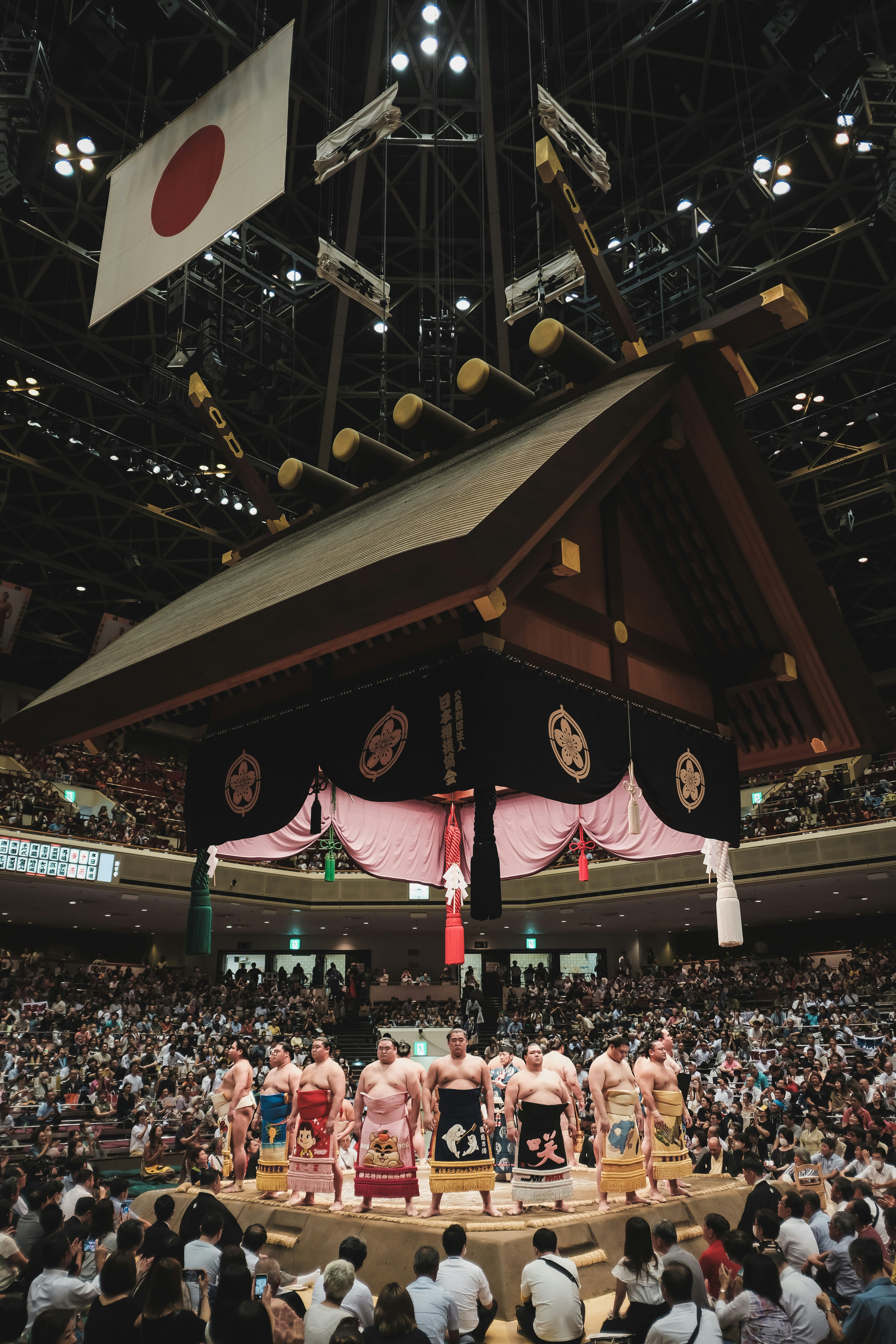
Rikishi is the Japanese word for a professional sumo wrestler. It is written 力士, combining the characters for "power" and "person" or "samurai," and it is used for the wrestler in the same way "boxer" is used in English. In English-language coverage you will also see "sumo wrestler," "sumotori" or simply "wrestler," but rikishi is the term used by the Japan Sumo Association (JSA) itself.
The word matters because it points to something English does not capture well. A rikishi is not only an athlete. He is a member of a stable, a rank in a hierarchy that is rebuilt after every tournament, and a participant in a tradition the JSA describes as around 1,500 years old, with roots in shrine rituals held to pray for a good harvest.
How Many Rikishi Are There, and How Are They Ranked?
The JSA's English introduction to sumo puts the total at about 700 rikishi. A 2018 snapshot published by nippon.com counted 683 wrestlers across 47 stables. Numbers move a little every tournament, so treat those figures as the right order of magnitude, not an exact current count.
Rikishi are divided into six divisions. From lowest to highest:
Division | Japanese | Notes |
|---|---|---|
Jonokuchi | 序ノ口 | Entry level. Newcomers start here after the trial bouts called maezumo. |
Jonidan | 序二段 | Second-lowest division. |
Sandanme | 三段目 | Third division. |
Makushita | 幕下 | The last division before the paid, "sekitori" ranks. |
Juryo | 十両 | The first division whose wrestlers are called sekitori. |
Makuuchi | 幕内 | The top division, with up to 42 rikishi. |
Inside makuuchi there is a further ladder: maegashira at the bottom, then komusubi, sekiwake, ozeki and, at the very top, yokozuna. The ozeki, sekiwake and komusubi are together known as the sanyaku. According to the JSA, roughly a quarter of makuuchi wrestlers hold one of the top four named ranks.
The 2018 nippon.com snapshot shows how the pyramid is shaped. At that time the makuuchi division held 3 yokozuna, 3 ozeki, 2 sekiwake, 2 komusubi and 32 maegashira, and below it sat 28 in juryo, 120 in makushita, 200 in sandanme, 224 in jonidan and 69 in jonokuchi. The great majority of rikishi never reach the paid ranks.
What is the banzuke?
The banzuke is the official ranking sheet. The JSA revises it after each Grand Tournament based on results, so a rikishi moves up or down according to his win-loss record.
What is a yokozuna?
A yokozuna is the highest rank in sumo. According to the JSA, only 72 rikishi have ever reached it. Promotion normally requires two consecutive tournament championships, or an equivalent record as an ozeki, and the approval of the sumo association on the wrestler's character as well as his results.
One rule sets the yokozuna apart from every other rank: a yokozuna cannot be demoted. When his results decline, he is expected to retire instead. Every other rank can fall.
What Is the Difference Between a Sekitori and Everyone Else?
Rikishi from juryo upward are called sekitori. Those below, up to and including makushita, are often called wakamono ("young fellows"). Web Japan, the Japanese government's English-language outreach site, describes the gap clearly: sekitori receive a monthly salary, while wakamono receive only a small allowance.
The gap shows up in daily life too:
- Mawashi color. Sekitori wear white mawashi (the belt) in competition, and the wakamono wear black, according to Web Japan.
- Hairstyle. Juryo and makuuchi wrestlers wear the oichomage, the fan-shaped topknot you see on television, while lower ranks wear the simpler chonmage, as noted by the JSA.
- Housing. Wrestlers from makushita down share communal quarters. Reaching sekitori rank earns a private room, and, according to nippon.com, only married sekitori in juryo and makuuchi may live outside the stable.
- Duties. Wakamono act as attendants to the sekitori. Web Japan lists looking after their needs, washing clothes, serving meals and tightening the mawashi during tournaments.
Because rank is rewritten every tournament, a rikishi who drops out of juryo loses sekitori status. A higher-ranked wrestler could in principle end up serving someone he once outranked.
What Is a Heya, and How Do Rikishi Live?
A heya (部屋) is a sumo stable, the training and living community every rikishi belongs to. Nippon.com counted 47 of them in 2018. A rikishi does not choose his own training schedule or sign with a team in the Western sense; he joins a specific heya, under a specific stablemaster, and lives there.
The structure is built like a household:
- The oyakata is the stablemaster and is treated as the "father" of the stable.
- His wife, the okamisan, is the "mother." Nippon.com describes her as running the stable's day-to-day operations.
- Older wrestlers are ani-deshi (older brothers) and younger ones are ototo-deshi (younger brothers), as Web Japan explains.
A typical stable puts the practice area, the keikoba, on the ground floor, and living quarters above. The oyakata and his family usually live on the top floor. Wrestlers from makushita down sleep in shared rooms called obeya.
A stable also sets who fights whom. Nippon.com notes that stablemates are not matched against each other in the Grand Tournaments, with a rare exception for a final-day bout between two stablemates tied on wins.
What Does a Rikishi Do All Day?
A morning in a stable begins early and starts with training, not food. Nippon.com's visit to Takadagawa stable describes the routine:
- Wrestlers generally wake around 6:00 a.m., wash and go to the keikoba.
- They skip breakfast. Their first meal comes around noon, after morning practice.
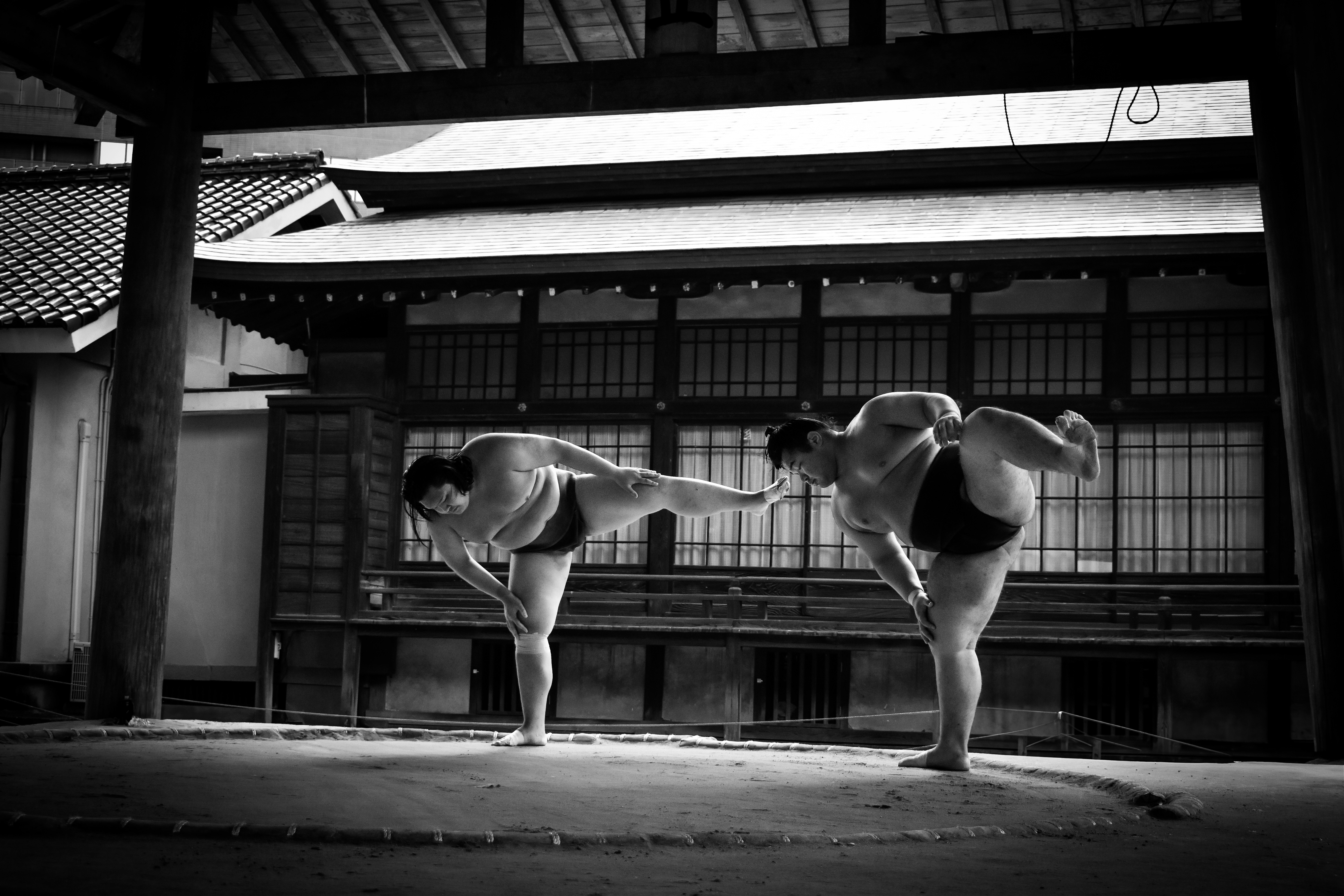
- By 7:00 a.m. most wrestlers are in the keikoba warming up individually with the basic exercises: shiko (the leg-stomping), teppo (striking a wooden pillar) and suriashi (sliding footwork), with the focus on breathing and no chatting.
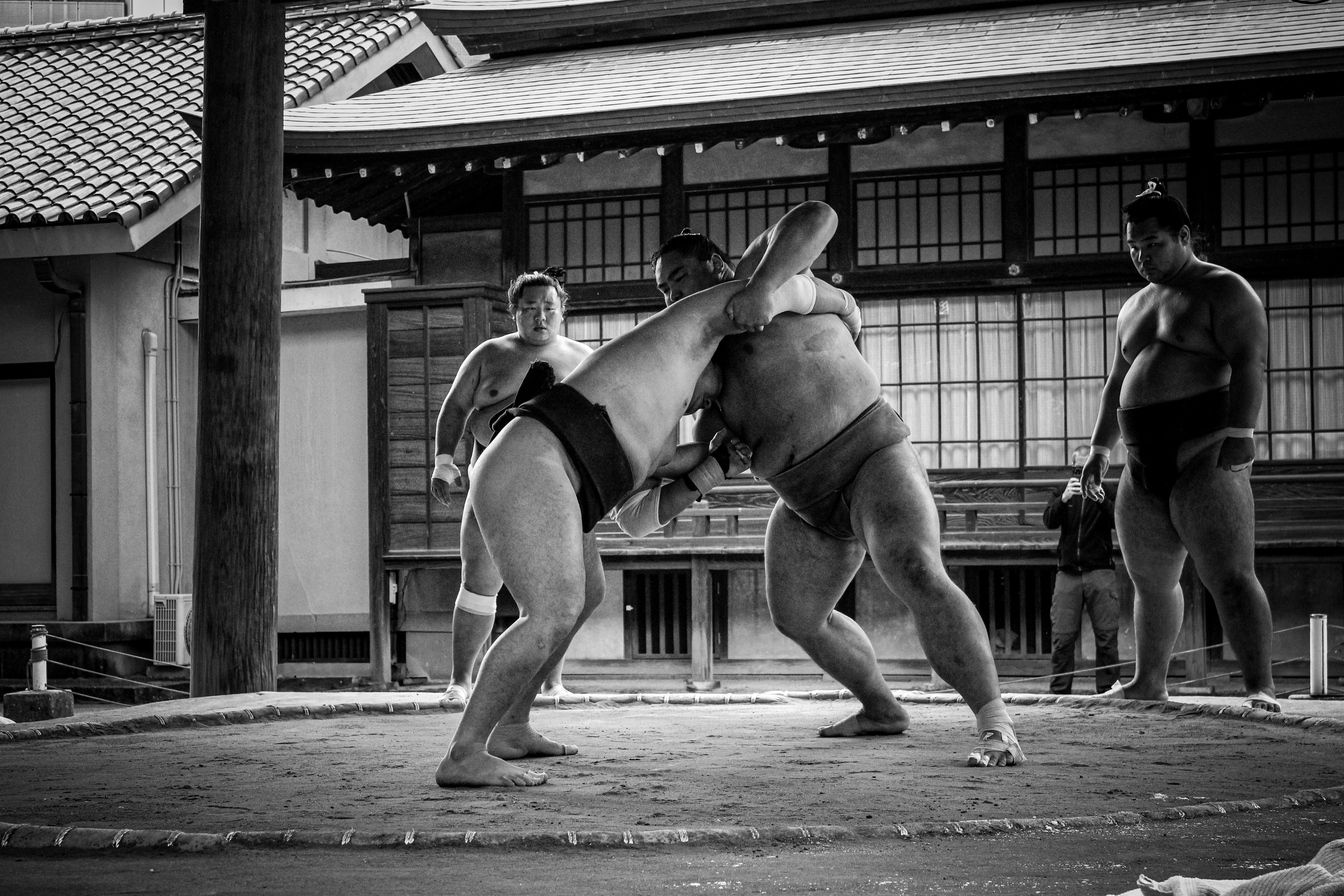
Web Japan describes practice as beginning by 6 a.m. in many stables, with the lower-ranked wrestlers using the ring first, and lasting about four hours. The session alternates between moshiai-geiko, in which winners stay in the ring and pick the next opponent, and butsukari-geiko, in which a stronger wrestler stands as a target and the junior pushes him across the ring.
The schedule varies from stable to stable, so exact times differ. What stays constant is the order: sleep, hard training on an empty stomach, then the main meal, then rest and chores. Younger wrestlers also carry out the household work of the stable, as described above.
Hair is part of the routine as well. Wrestlers' hair is arranged into the topknot by a specialist hairdresser called a tokoyama, according to Web Japan.
How Do You Become a Rikishi?
A newcomer joins a stable, takes the recruit examination before a Grand Tournament, is registered as a rikishi, and then fights in the maezumo trial bouts before starting in the lowest division.
The entry conditions have changed in recent years, so here is the current picture from the sources:
- Age. An apprentice recruitment page from Isegahama stable gives the entry age as under 23.
- Education. The candidate must have completed compulsory education through junior high school. Free Malaysia Today reports that this rule has been in force since 1973.
- Size. Until 2023 the minimum was 167 cm and 67 kg. The JSA announced in late September 2023 that applicants would no longer have to meet those figures and would instead pass a physical fitness test, as reported by Fox News and the Asahi Shimbun.
- Health. Candidates must pass a medical examination.
- Minors. Applicants who are still minors need the approval of a parent or guardian.
The reason the size rule was relaxed is recruitment. The Asahi Shimbun reported that only 34 men applied to become rikishi in 2023, tying the lowest figure ever, compared with 160 in 1992. In March 2026, Free Malaysia Today reported that 20 aspiring wrestlers attended the entry exam for the Spring Grand Tournament, the lowest number recorded and well below the 160 of March 1992.
The sport is also international. The 2026 coverage mentions Ukrainian-born Aonishiki among the current wrestlers, one example of how the ranks now include rikishi born outside Japan.
How Are Rikishi Paid?
Only sekitori receive a regular salary. For everyone else, the stable provides housing and the JSA pays a small allowance. Web Japan states this distinction directly, though it does not give amounts.
A July 2026 report in Daily Sports on the JSA board meeting of 30 July says the sekitori salaries, revised for the first time in eight years, will rise from January 2027. The figures it gives for the top two ranks:
Rank | Monthly salary now | From January 2027 |
|---|---|---|
Yokozuna | ¥3,000,000 | ¥3,300,000 |
Ozeki | ¥2,500,000 | ¥2,750,000 |
The same report says the prize for winning the makuuchi championship will double from ¥10,000,000 to ¥20,000,000, the first change since 1994, and that the three special prizes will rise from ¥2,000,000 to ¥3,000,000. Those special prizes are the Shukun-sho (for defeating the most yokozuna and ozeki), the Kanto-sho (fighting spirit) and the Gino-sho (technique), and a wrestler must have at least eight wins to receive one, according to the JSA.
The Daily Sports report did not state new salary figures for the lower sekitori ranks, so this guide does not either.
How Does a Sumo Bout Work?
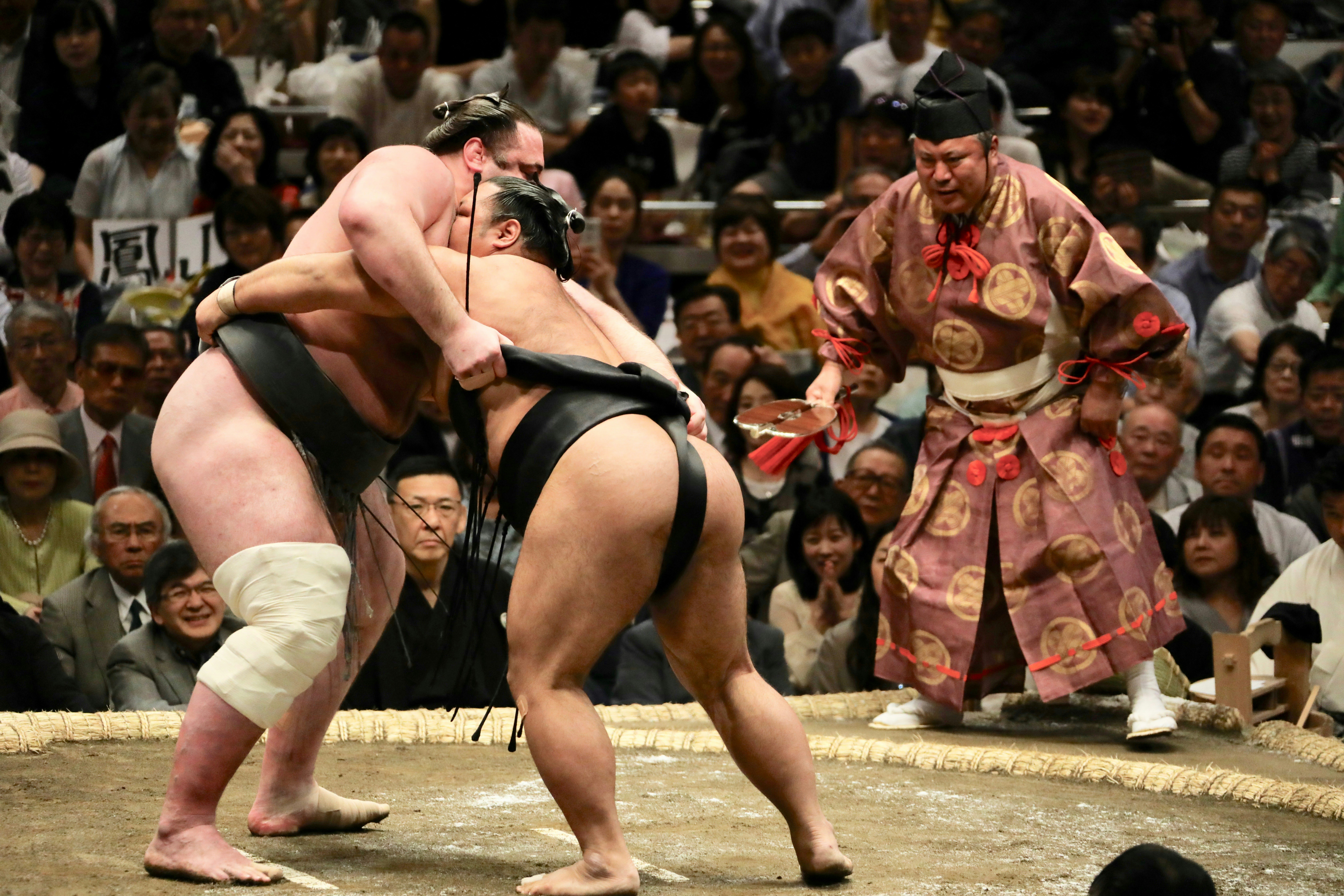
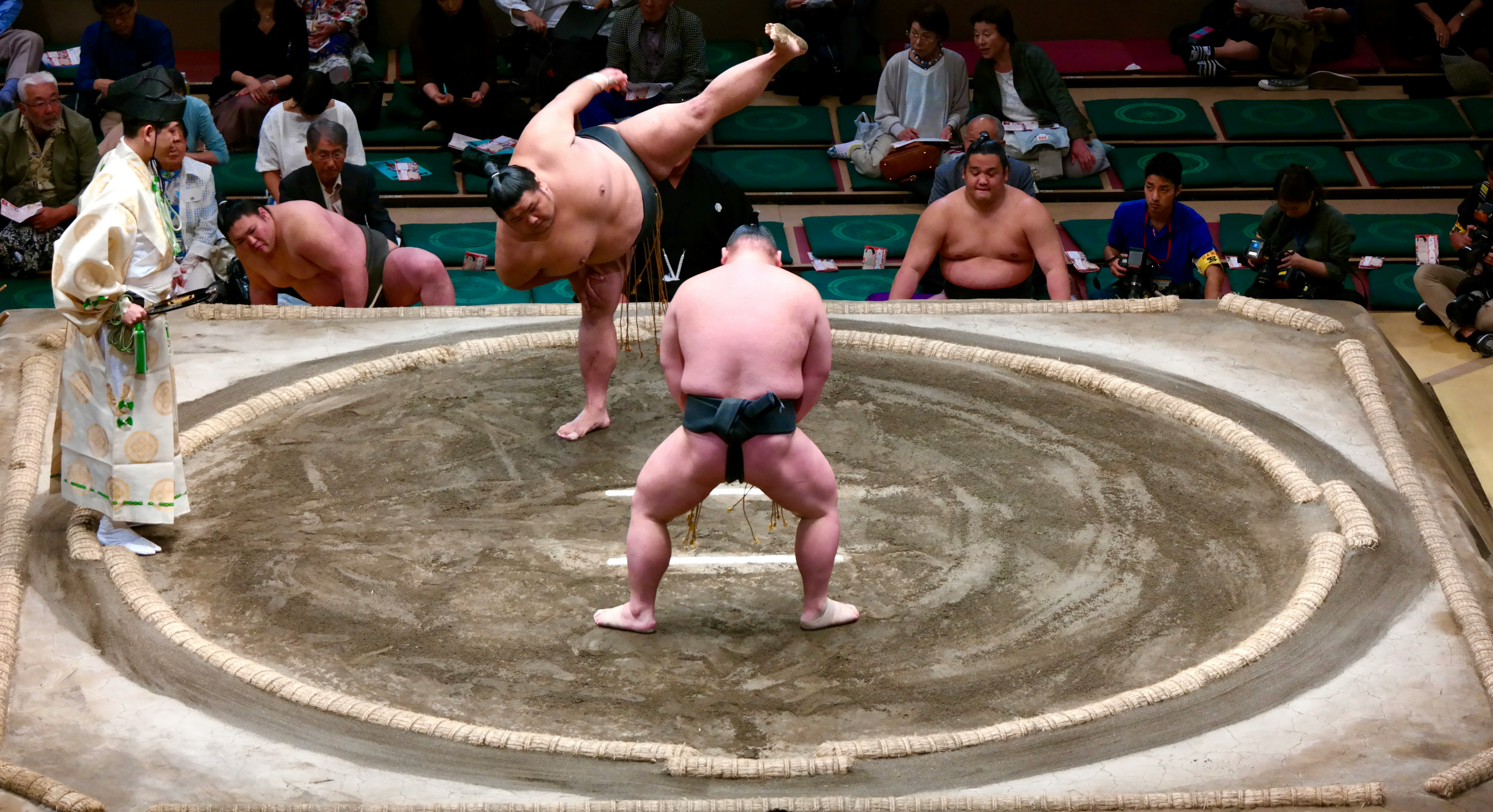
A bout is short and simple to follow once you know the rule. According to the JSA, a rikishi wins by forcing his opponent out of the inner circle or by throwing him down inside the ring. Any body part other than the soles of the feet touching the ground loses the bout, and so does stepping on or over the straw bales.
Other points from the JSA's introduction:
- The ring. The dohyo is a clay platform 6.7 m square and 60 cm high, topped with a thin layer of sand. The bouts take place in an inner circle just over 4.55 m across. The ring is partly rebuilt for each tournament.
- No weight classes. There are no weight limits, which is why very different body types meet.
- Techniques. There are 82 official winning techniques, many involving a grip on the mawashi.
- Banned moves. Punching, hair pulling, eye gouging, choking, kicking the stomach or chest, and grabbing the part of the mawashi covering the vital organs.
- Pre-bout time. Four minutes in makuuchi, three in juryo and almost none in the lowest divisions.
- The mawashi. A silk belt about 9 m long and 80 cm wide, wrapped around the waist four to seven times.
Officials run the bout. The gyoji (referee) calls it, and five shimpan (judges), who are former rikishi chosen by the association's elders, sit around the ring and can overrule the referee or order a rematch.
What Are the Six Grand Tournaments?
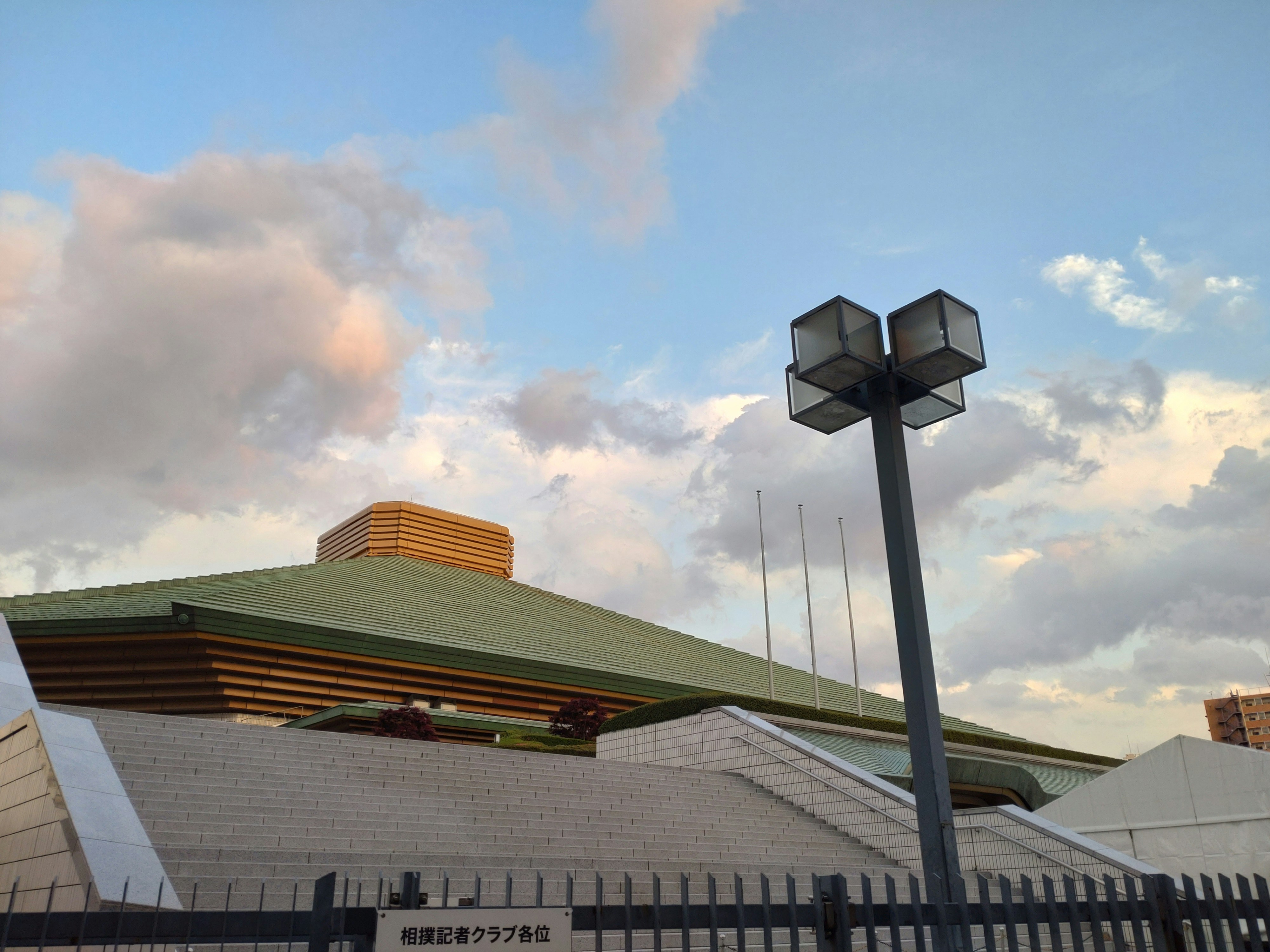
Professional sumo is organised around six honbasho, or Grand Tournaments, each held for 15 days. The JSA lists them as three in Tokyo (January, May and September), one in Osaka (March), one in Nagoya (July) and one in Fukuoka (November).
In each one:
- Makuuchi and juryo rikishi fight once a day, against a different opponent each day.
- Makushita and below fight on seven days.
- The Emperor's Cup goes to the wrestler with the best record on the final day.
- The matches begin in the morning with the lowest ranks and build toward the yokozuna bouts at the end of the day.
Daily Sports also reports that ticket prices for the Tokyo and Osaka tournaments are being raised.
How Is a Rikishi Different From a Performer in a Sumo Show?
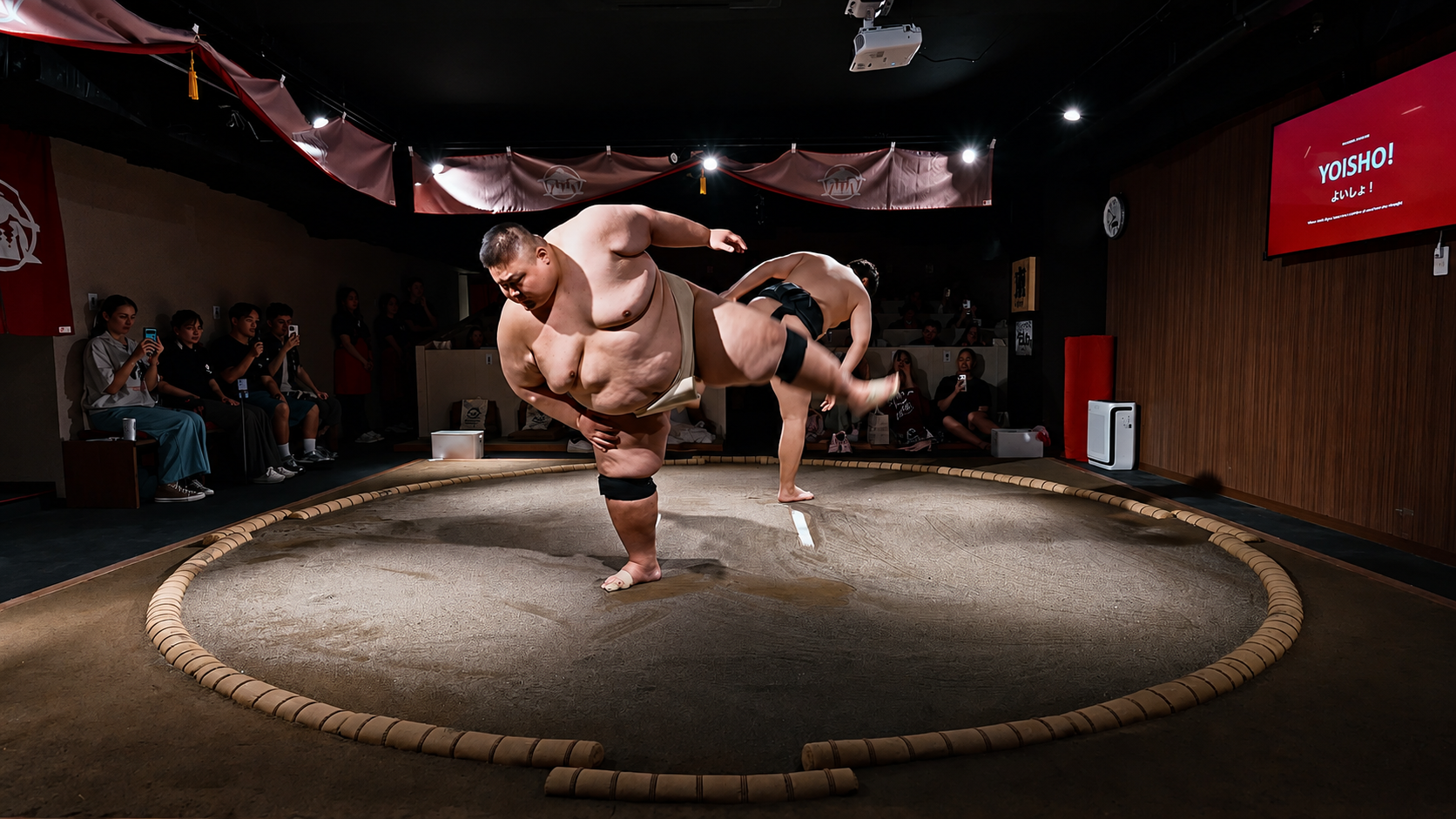
A rikishi, in the sense used in this guide, is a registered professional who competes in the official tournaments and holds a place on the banzuke. A sumo show is a different format: a demonstration designed to explain and showcase the sport, usually to visitors who have never seen it, and not an official tournament.
Visitors in Tokyo can see the difference by attending both. A Grand Tournament, such as the Tokyo ones in January, May and September, is the sport at full strength. A show is a shorter, explained introduction. TRAVELING JAPAN lists live sumo shows in Tokyo, Kyoto and Osaka for anyone who wants that introduction before buying tickets for a tournament.
Frequently Asked Questions
What does rikishi mean in English?
Rikishi (力士) means "strong man" or "powerful man" and is the Japanese word for a professional sumo wrestler. The JSA uses it for every wrestler from the lowest division to yokozuna.
Is rikishi the same as sumo wrestler?
Yes, in everyday use. Rikishi is the Japanese term and "sumo wrestler" is the English one. Rikishi refers to professionals registered with the Japan Sumo Association.
How many rikishi are there?
About 700, according to the JSA's English introduction. A 2018 count by nippon.com found 683 across 47 stables. The number changes with every recruitment round and retirement.
What is a sekitori?
A sekitori is a rikishi in the juryo or makuuchi divisions, the two paid divisions at the top. Web Japan says sekitori receive a monthly salary, while the lower ranks receive a small allowance.
Who is the highest-ranked rikishi?
The highest rank is yokozuna. The JSA says only 72 rikishi have ever reached it, and a yokozuna cannot be demoted, so a poor run is expected to end in retirement.
Do rikishi have to be heavy?
Not by a formal rule. There are no weight classes in sumo, and the JSA dropped its minimum height and weight (167 cm and 67 kg) for new recruits in 2023. Applicants now take a physical fitness test instead.
What do rikishi eat?
Nippon.com reports that wrestlers skip breakfast and eat their first meal around noon, after morning practice.
Can foreigners become rikishi?
Yes. The ranks include wrestlers born outside Japan, and recent coverage names Ukrainian-born Aonishiki as one of them. Candidates must still meet the entry requirements, such as the age limit and the physical test.
About This Article
Written by [Author name] for TRAVELING JAPAN. Last updated 24 November 2026. Facts about salaries, recruitment numbers and ticket prices were checked against the sources below on that date. Salary, prize and ticket changes for January 2027 are announced, not yet in force.
Sources
- Japan Sumo Association. Sumo: An Introduction (English PDF). https://www.sumo.or.jp/pdf/en/sumo_introduction.pdf (history, ranks, ring, rules, tournaments, yokozuna count, special prizes)
- nippon.com. "Daily Life at a Sumo Stable: A Visit to the Takadagawa Stable." https://www.nippon.com/en/views/b02346/daily-life-at-a-sumo-stable-a-visit-to-the-takadagawa-stable.html (routine, living arrangements, 2018 counts)
- Web Japan (NIPPONIA No. 32). "Sumo." https://web-japan.org/nipponia/nipponia32/en/topic/index02.html (sekitori and wakamono, duties, practice, mawashi colors, stable hierarchy)
- Daily Sports Online. "大相撲 幕内優勝賞金を2倍の2000万円に…" 31 July 2026. https://www.daily.co.jp/general/2026/07/31/0020651972.shtml (salary, prize and ticket revisions from January 2027)
- Tachiai. "Sumo News Update, July 2026." https://tachiai.org/2026/07/31/sumo-news-update-july-2026/ (prize amounts by division)
- Fox News, citing the Asahi Shimbun. "Skinny sumo wrestlers? Height and weight requirements are dropped by sport's governing body," 20 October 2023. https://www.foxnews.com/lifestyle/skinny-sumo-wrestlers-height-weight-requirements-dropped-governing-body (2023 rule change, recruitment figures)
- Free Malaysia Today. "Sumo sees fewer new recruits despite growing popularity," 18 March 2026. https://www.freemalaysiatoday.com/category/sports/2026/03/18/sumo-sees-fewer-new-recruits-despite-growing-popularity (March 2026 entry exam numbers, compulsory-education rule)
- Isegahama stable. "New Apprentice Recruitment." https://isegahama.net/en/?p=243 (entry age, health and parental consent). Note: the page still lists the pre-2023 size minimum.