
Sumo Rules for Beginners: Rituals and What Actually Happens at a Show
Published 7 Nov 2026
Short answer: Sumo rules for beginners are simple: two wrestlers fight inside a raised clay ring. The first to be forced out of the ring, or to touch the ground with anything other than the soles of his feet, loses. There are no weight classes and no points, just one bout and one winner. Rituals come first.
This guide explains sumo rules for beginners in plain terms: the ring, the rituals before a bout, how a winner is decided, the words you'll hear, and what happens at a Tokyo sumo show.
In this guide
- Sumo rules for beginners: the basics in one minute
- The ring and who's in it
- The rituals before a bout
- How a bout is won
- Sumo words to know
- What happens at a sumo show
- Frequently asked questions
- Venue and booking details
Sumo Rules for Beginners: The Basics in One Minute
- The goal: push or throw your opponent out of the ring, or make him touch the ground with any part of his body other than the soles of his feet.
- The fight: one bout, one winner, no points and no weight classes.
- The calendar: six grand tournaments a year, each 15 days long. Three are in Tokyo, in January, May and September.
- The ranks: wrestlers rise or fall through six divisions based on their records at tournaments.
The Ring and Who's in It
The ring is called the dohyo: a raised platform of pounded clay, topped with a roof in the style of a Shinto shrine. The circle in which the wrestlers fight is about 4.55 meters (roughly 15 feet) across. Because the slightest touch outside the circle decides a bout, the clay is brushed smooth before each one.
Three kinds of people are on or around it:
- Rikishi: the wrestlers.
- Gyoji: the referee, dressed in a traditional robe, who oversees the bout and points to the winner.
- Yobidashi: the attendant who calls the wrestlers' names and looks after the ring.
The Rituals Before a Bout
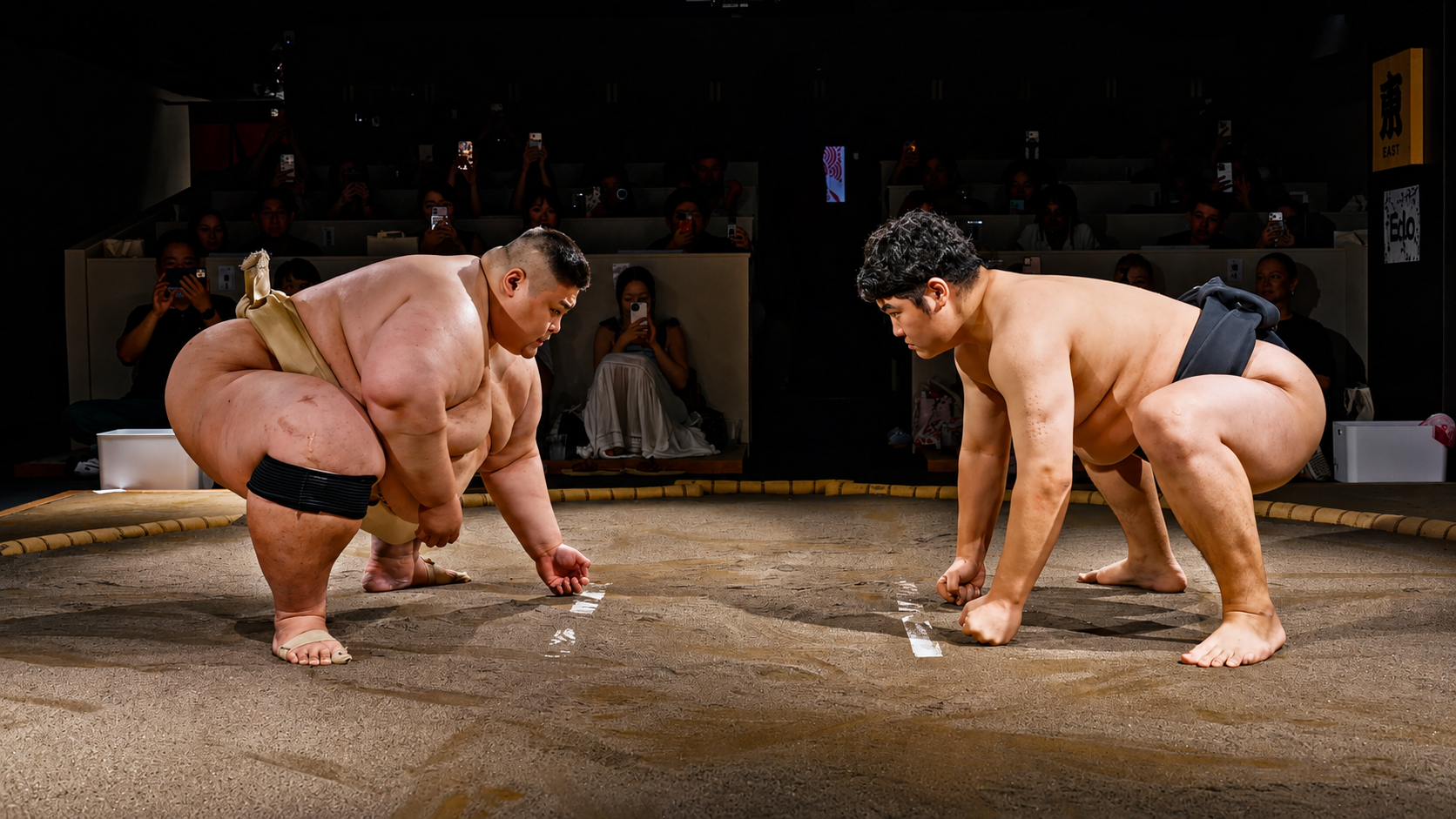
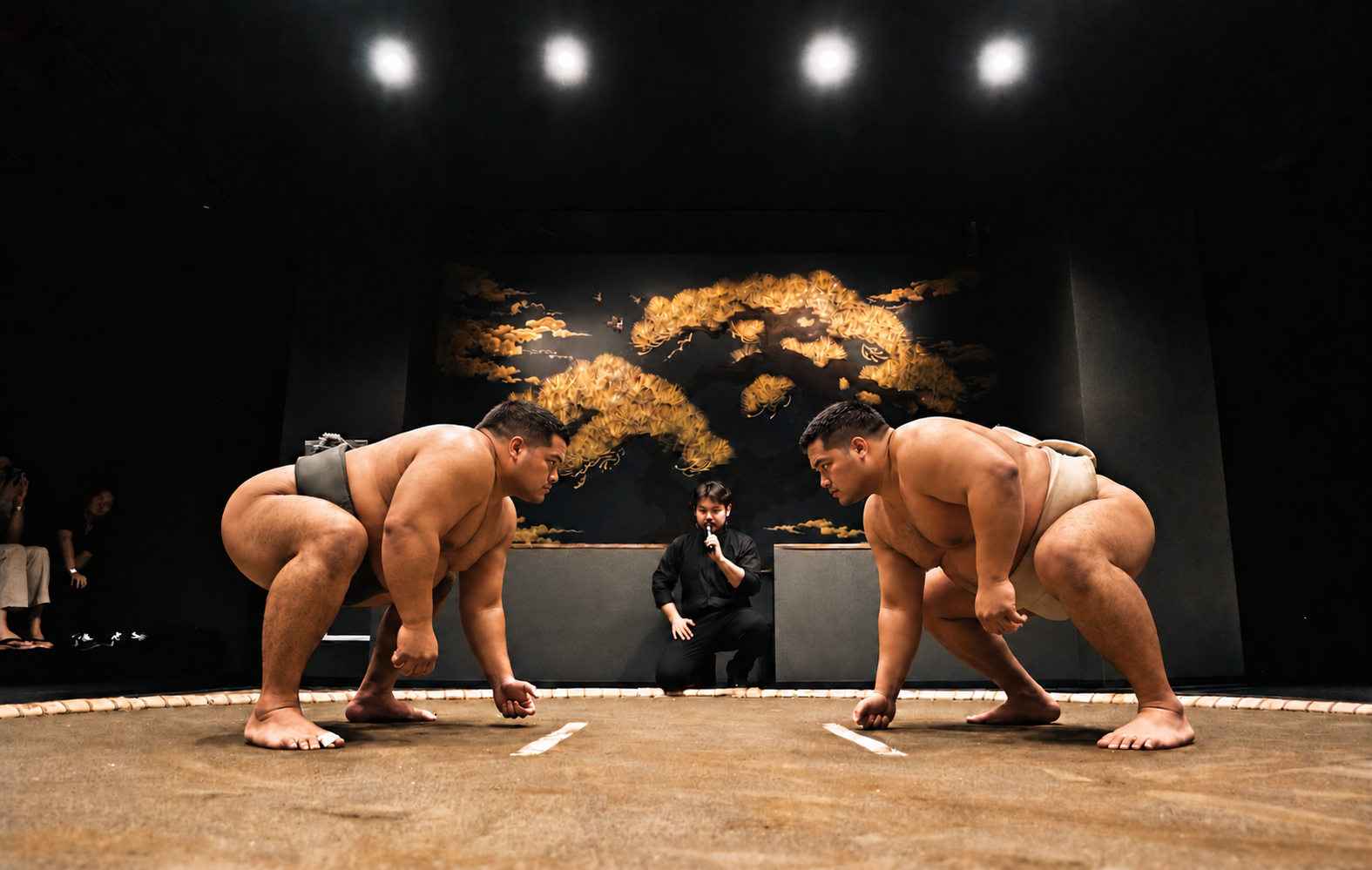
Here's a pre-match fact worth knowing: the ritual can last longer than the bout. That's by design, not a scheduling error.
- Names are called. The yobidashi announces each wrestler and the sides they're on, east and west.
- The wrestlers step onto the dohyo. They enter from the east and west sides of the ring.
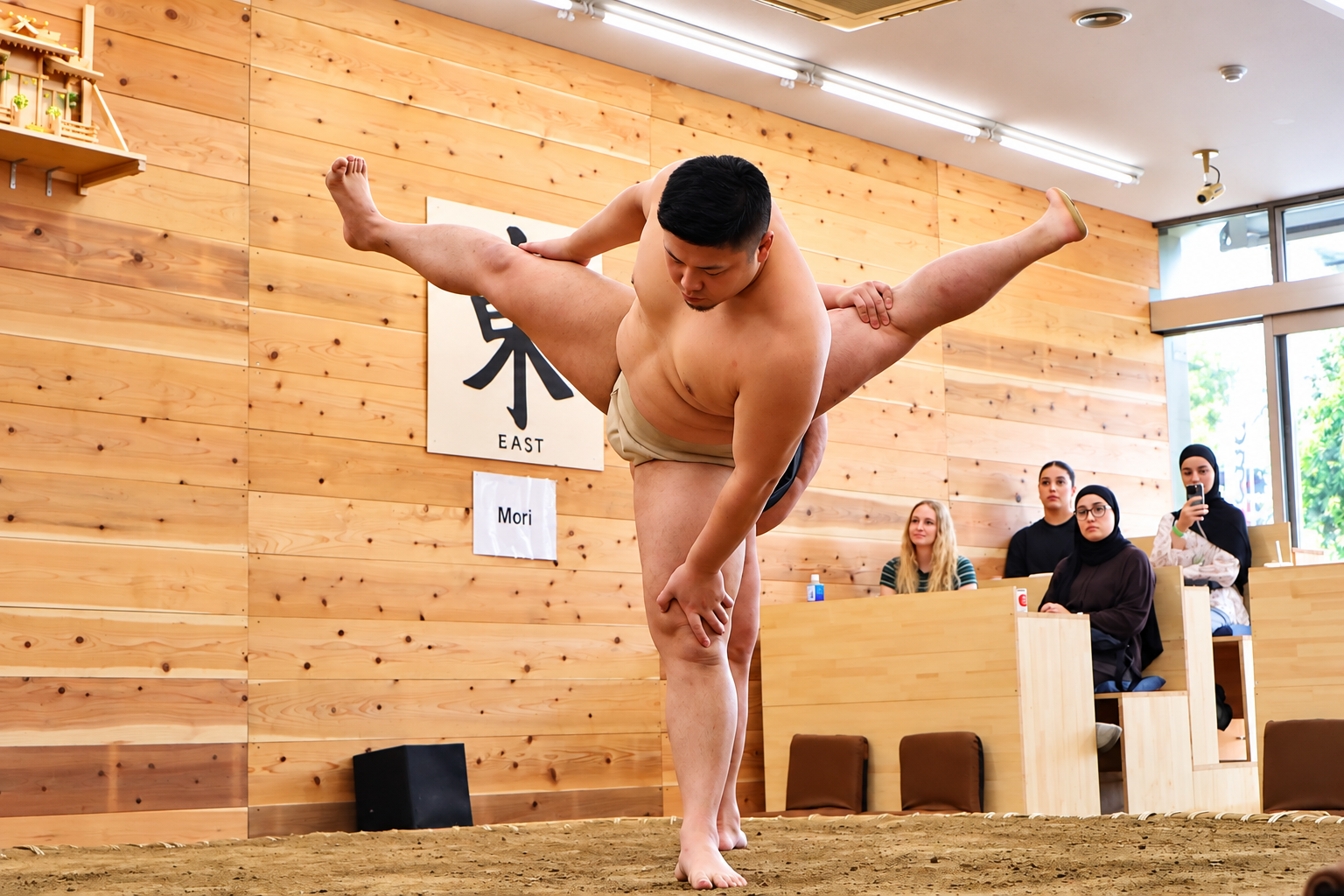
- They perform shiko. Each lifts a leg high and stamps it down with force, hands on the knees. The stamp is traditionally said to drive evil spirits from the ring.
- They throw salt. This is shio-maki, a purification gesture drawn from Shinto tradition. Throwing salt is the privilege of the top two divisions, makuuchi and juryo.
- They crouch, stare and return to their corners. In the higher divisions this repeats several times, with more salt and a sip of water.
- They charge. When both are ready, they launch off the starting lines. That first collision is called the tachiai.
During the bout the referee calls "Nokotta" ("remaining") while the wrestlers grapple and "Hakkiyoi" when they aren't moving, according to Kids Web Japan.
How a Bout Is Won
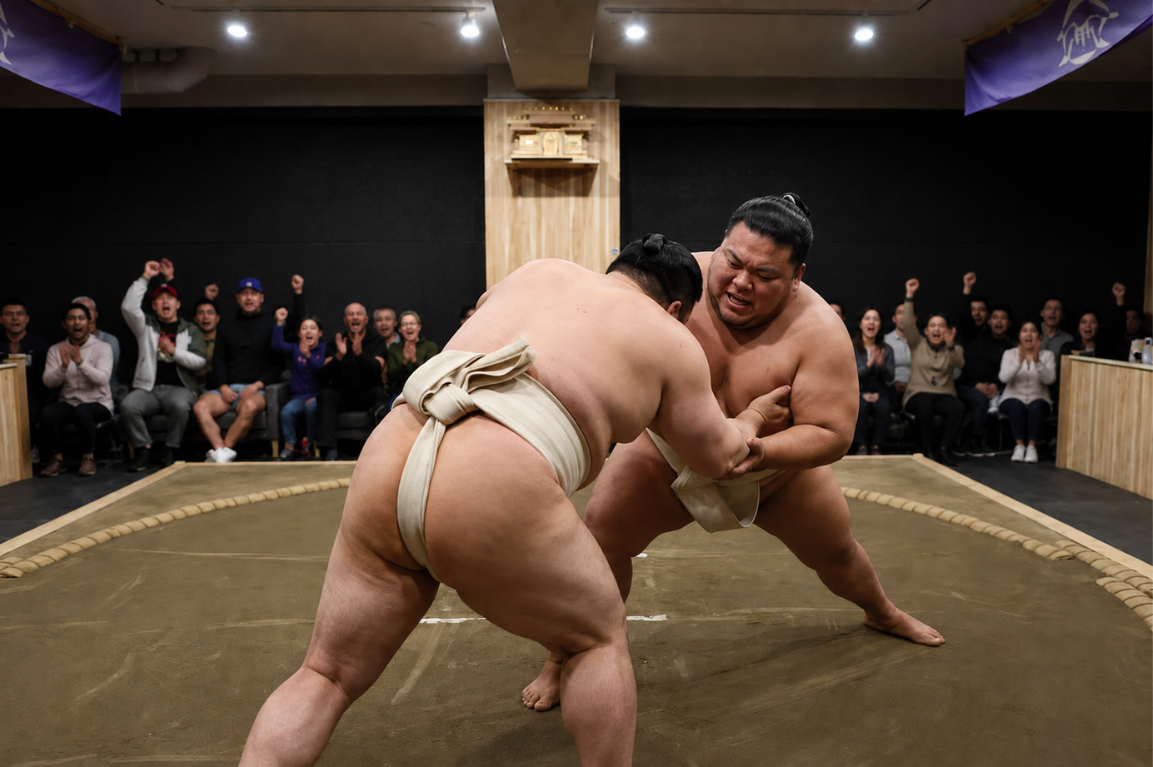
There are only two ways to lose. You're pushed or thrown out of the ring, or you touch the ground with anything other than the soles of your feet. Most bouts are over in seconds. The skill is in how a wrestler gets there, and each winning technique has its own name: a kimarite. Officially, there are 82 of them. A few you'll hear often:
- Yorikiri: a frontal force-out, gripping the belt and driving the opponent backward out of the ring.
- Oshidashi: a frontal push-out without a belt grip.
- Uwatenage: an overarm throw.
- Hatakikomi: a slap-down, pulling the opponent forward onto the ground.
At a show, the host points out the techniques as they happen, so you don't need to memorize the list.
Sumo Words to Know
Term | Meaning |
|---|---|
Dohyo | The raised clay ring |
Rikishi | A sumo wrestler |
Gyoji | The referee |
Mawashi | The belt wrestlers wear and grip |
Shiko | The leg-raising stamp before a bout |
Shio-maki | Throwing salt to purify the ring |
Tachiai | The first charge at the start of a bout |
Kimarite | A winning technique; 82 are officially recognized |
Basho | A grand tournament |
Yokozuna | The highest rank in sumo |
Chanko | The hot pot wrestlers eat to build mass |
What Happens at a Sumo Show
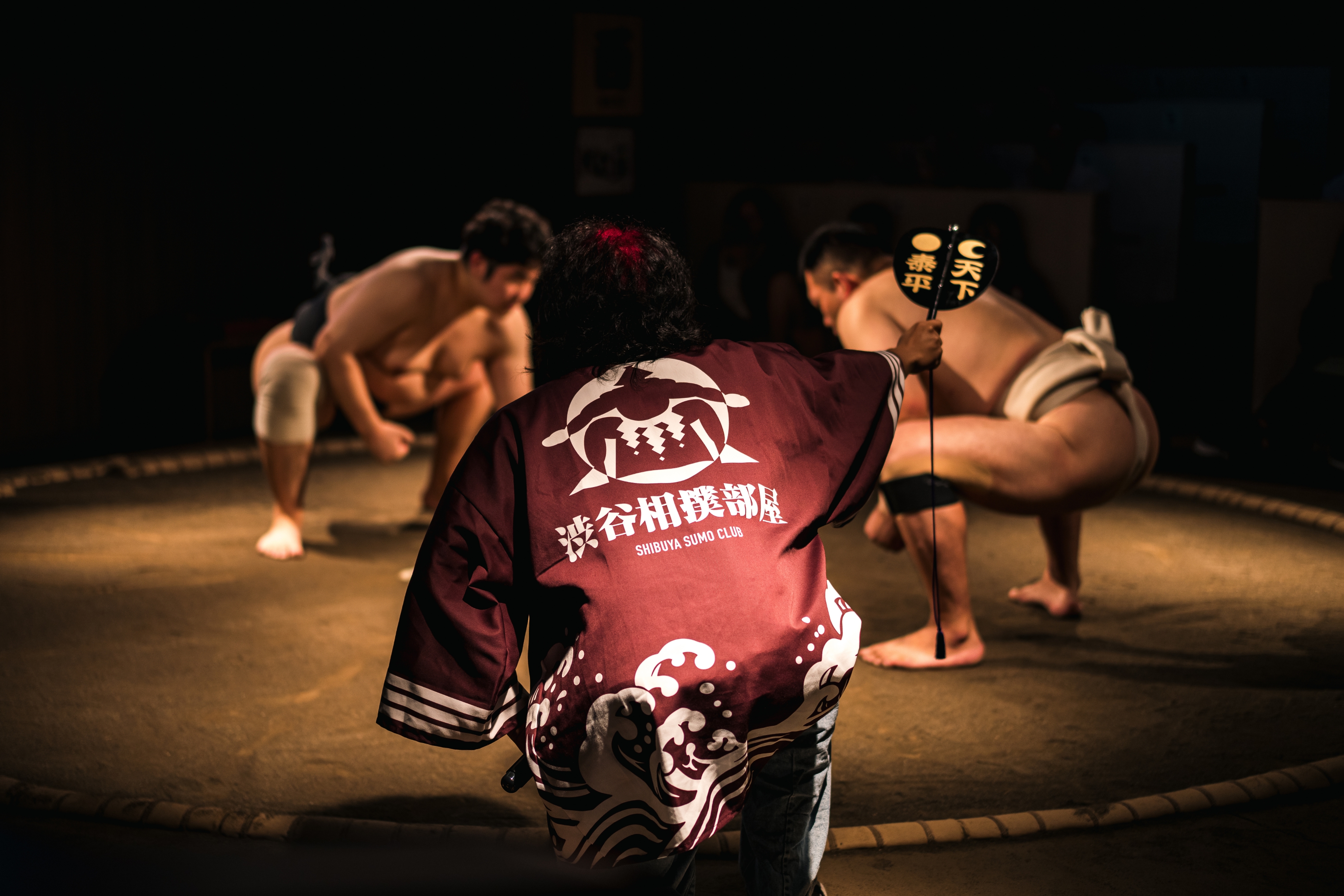
Once you know the sumo rules for beginners, a show makes them easy to see. It compresses all of the above into about 90 minutes, with a host to translate it. At the Shinjuku, Shinjuku Kabukicho and Shibuya shows, the program runs in this order:
- Introduction. An English-speaking host explains sumo's history, basic rules, etiquette and how wrestlers train.
- Demonstrations. Retired professional wrestlers show the techniques and rituals up close.
- Live bouts. The wrestlers fight real bouts in the ring.
- Sumo Challenge. Guests can join in and face a wrestler.
- Photos. Everyone can pose with the wrestlers afterward.
You don't need to know any of this in advance. The host covers it, in English and Japanese. If you'd rather watch an official tournament, read the difference in our guide to sumo shows versus grand tournaments.
See prices, show times and food options for every venue in our guide to the best sumo shows in Tokyo.
Conclusion
Sumo rules for beginners come down to one sentence: stay inside the ring and keep your body off the ground. Everything else, from the salt to the stare-downs, is ritual and technique layered on top. The fastest way to understand it is to see a bout up close with someone explaining it. Reserve a show and watch the rules play out.
Frequently Asked Questions
What are the sumo rules for beginners?
The wrestler who is forced out of the ring, or who touches the ground with anything other than the soles of his feet, loses. There are no weight classes and no scoring. Each bout has one winner and is usually over in seconds, though the rituals before it take longer.
Why do sumo wrestlers throw salt?
Throwing salt, called shio-maki, is a purification ritual drawn from Shinto tradition. Wrestlers scatter it to cleanse the ring and ask for protection from injury. Throwing salt is the privilege of the top two divisions, and the salt basket sits at the edge of the dohyo.
How big is a sumo ring?
The fighting circle is about 4.55 meters, roughly 15 feet, across. It sits on a raised platform of pounded clay and is topped with a roof styled like a Shinto shrine. The clay is brushed smooth before each bout because even a slight touch outside the circle decides a result.
How long does a sumo bout last?
Most bouts are over in seconds, but the rituals before them take longer. Higher-division wrestlers repeat the salt-throwing and stare-downs several times before they charge. Many bouts are decided within moments of that first charge, the tachiai, so watch the opening second closely.
Do sumo wrestlers have weight classes?
No. Sumo has no weight classes, so wrestlers of very different sizes can face each other. Wrestlers are instead ranked in six divisions based on their results at tournaments, from the lowest rank up to the top division, with yokozuna as the highest rank.
What does "hakkiyoi" mean?
Hakkiyoi is what the referee calls out when the wrestlers aren't moving, roughly meaning "come on." While they grapple, he calls "Nokotta," meaning "remaining." Both calls tell the wrestlers and the crowd that the bout is still on, and you'll hear them repeatedly through a tournament bout.
Do I need to know the rules before going to a sumo show?
No. At the Shinjuku, Shinjuku Kabukicho and Shibuya shows, an English-speaking host explains the history, rules and etiquette before the bouts start, and points out the techniques as they happen. Knowing the basics from this guide just makes the bouts easier to follow.
Venue and Booking Details
- Shinjuku Sumo Club: Sekisaku Building 2F, 2-5-22 Okubo, Shinjuku-ku, Tokyo · 9:30–22:30 (last entry 20:00) · near Shin-Okubo and Higashi-Shinjuku stations
- Shinjuku Kabukicho Sumo Club: K-SQUARE 1F, 1-8-4 Okubo, Shinjuku-ku, Tokyo · near Shin-Okubo Station
- Shibuya Sumo Club: Daiichi Silver Building, 5-20-11 Sendagaya, Shibuya-ku, Tokyo · 9:00–21:00 · 1-minute walk from JR Yoyogi Station
- Shows: about 90 minutes · hosted in English · one drink included · same-day seats often available
- Book: travelingjapan.com/brands/sumo-show