
How to See Sumo in Tokyo: Show, Tournament or Morning Practice?
Published 8 Nov 2026
Short answer: How to see sumo in Tokyo depends on the month. If your trip falls in January, May or September, try for a grand tournament at Ryogoku Kokugikan, but expect tickets to sell out fast. In every other month, book a sumo show, which runs all year with English commentary. Morning practice suits travelers who want a quiet look at training.
This guide explains how to see sumo in Tokyo in three ways, each built for a different trip. It compares them on timing, price, language and booking difficulty, then gives you a plan B for when tournament seats are gone.
In this guide
- How to see sumo in Tokyo: the three options
- 2027 tournament dates and ticket sale dates
- How to see sumo in Tokyo: the tournament
- Sumo shows: the year-round option
- Morning practice
- Which one should you book?
- Frequently asked questions
- Venue and booking details
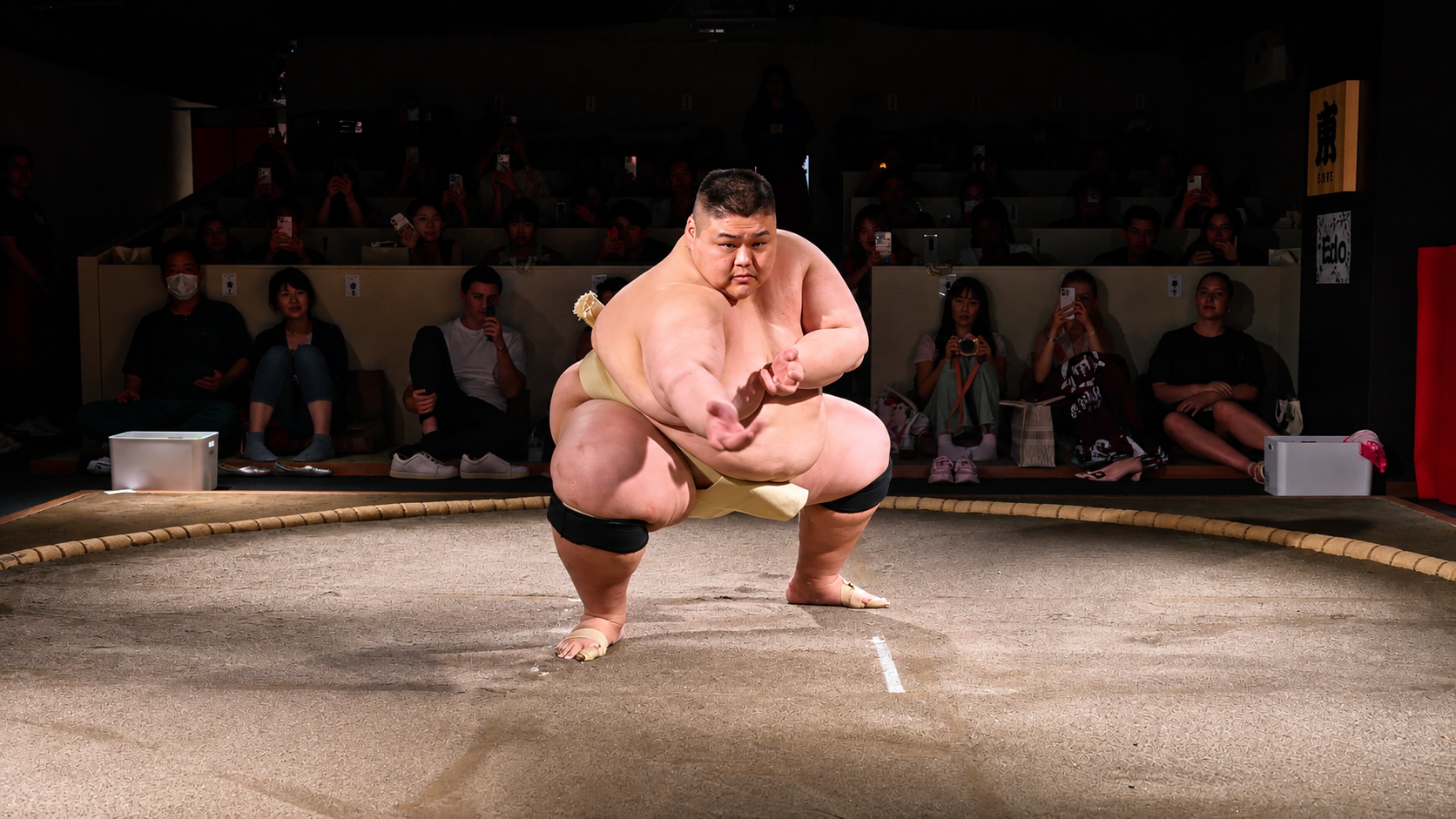
How to See Sumo in Tokyo: The Three Options Compared
Grand tournament (honbasho) | Sumo show | Morning practice (asageiko) | |
|---|---|---|---|
When | Jan, May and Sep in Tokyo; 15 days each | Year-round, up to 5 shows a day | Early morning; availability varies by stable |
Where | Ryogoku Kokugikan | Shinjuku, Shinjuku Kabukicho, Shibuya and other venues | A sumo stable |
Who wrestles | Active, ranked professionals | Retired professional wrestlers | Wrestlers in training |
English explanation | Limited; check the venue for English guides | Yes, guaranteed entertainment with live bilingual host | Depends on the tour guide |
Price | Varies by seat type | ¥10,000–¥10,000 for full-length shows at the venues | Varies by tour |
Booking difficulty | High; sells out fast | Low; same-day seats often available | Medium; tours have limited spots |
Show prices checked Nov 2026.
2027 Tournament Dates and Ticket Sale Dates
Tokyo hosts three of the six annual tournaments. Each lasts 15 days, and every wrestler in the top two divisions fights once a day. The dates below follow the Japan Sumo Association's 2027 schedule as reproduced by Explore Osaka; confirm them on the official page before you buy.
Tournament | Dates | Venue | Tickets on sale |
|---|---|---|---|
January (Hatsu Basho) | 10–24 Jan 2027 | Ryogoku Kokugikan, Tokyo | 5 Dec 2026 |
March | 14–28 Mar 2027 | EDION Arena, Osaka | 6 Feb 2027 |
May | 9–23 May 2027 | Ryogoku Kokugikan, Tokyo | 10 Apr 2027 |
July | 11–25 Jul 2027 | IG Arena, Nagoya | 15 May 2027 |
September | 12–26 Sep 2027 | Ryogoku Kokugikan, Tokyo | 7 Aug 2027 |
November | 14–28 Nov 2027 | Fukuoka | 18 Sep 2027 |
That leaves long gaps. There's no Tokyo tournament in February, March, April, June, July, August, October, November or December.
How to See Sumo in Tokyo: The Tournament
A tournament is the real thing: active, ranked wrestlers, a full day of bouts, and a crowd that knows exactly when to cheer. The venue opens at 8:00 AM and bouts run until around 6:00 PM, with the best-known wrestlers appearing late in the day.
The arena fills as the day goes on. Tickets sell quickly after they go on sale, so set a reminder for the sale date above.
How to buy tickets
- Use the official English ticket site, Ticket Oosumo, when sales open.
- Check that the page names the right tournament and year before you pay.
- If the date you want is gone, check the box office at Kokugikan. A limited number of same-day tickets are sold there, and a line forms before dawn.
- Avoid unofficial resellers. The Japan Sumo Association has warned against some resale sites.
Expect to sit through a lot of lower-division bouts before the top division starts. Plan your arrival around the wrestlers you want to see.
Sumo Shows: The Year-Round Option
A sumo show is a performance, not a competition. Retired professional wrestlers perform real bouts in a small ring, an English-speaking host explains the rituals and rules, and guests can join the Sumo Challenge and face a wrestler. A photo session follows.
Shows run about 90 minutes, start as early as 9:30 AM, and release same-day seats. In our booking data, roughly 3 in 10 guests book on the day.
Show | Price (adult) | Shows per day | Notes |
|---|---|---|---|
Shinjuku Sumo Show | ¥10,000 | 5 (10:00–20:00) | Drinks and photo included |
Shinjuku Kabukicho Sumo Club | ¥10,000 | 4 (13:00–20:30) | Chanko dinner options |
Shibuya Sumo Club | ¥10,000 | 5 (from 9:30) | Earliest start in Tokyo |
Prices checked Nov 2026; they vary by date and plan.
See every venue in our comparison of the best sumo shows in Tokyo.
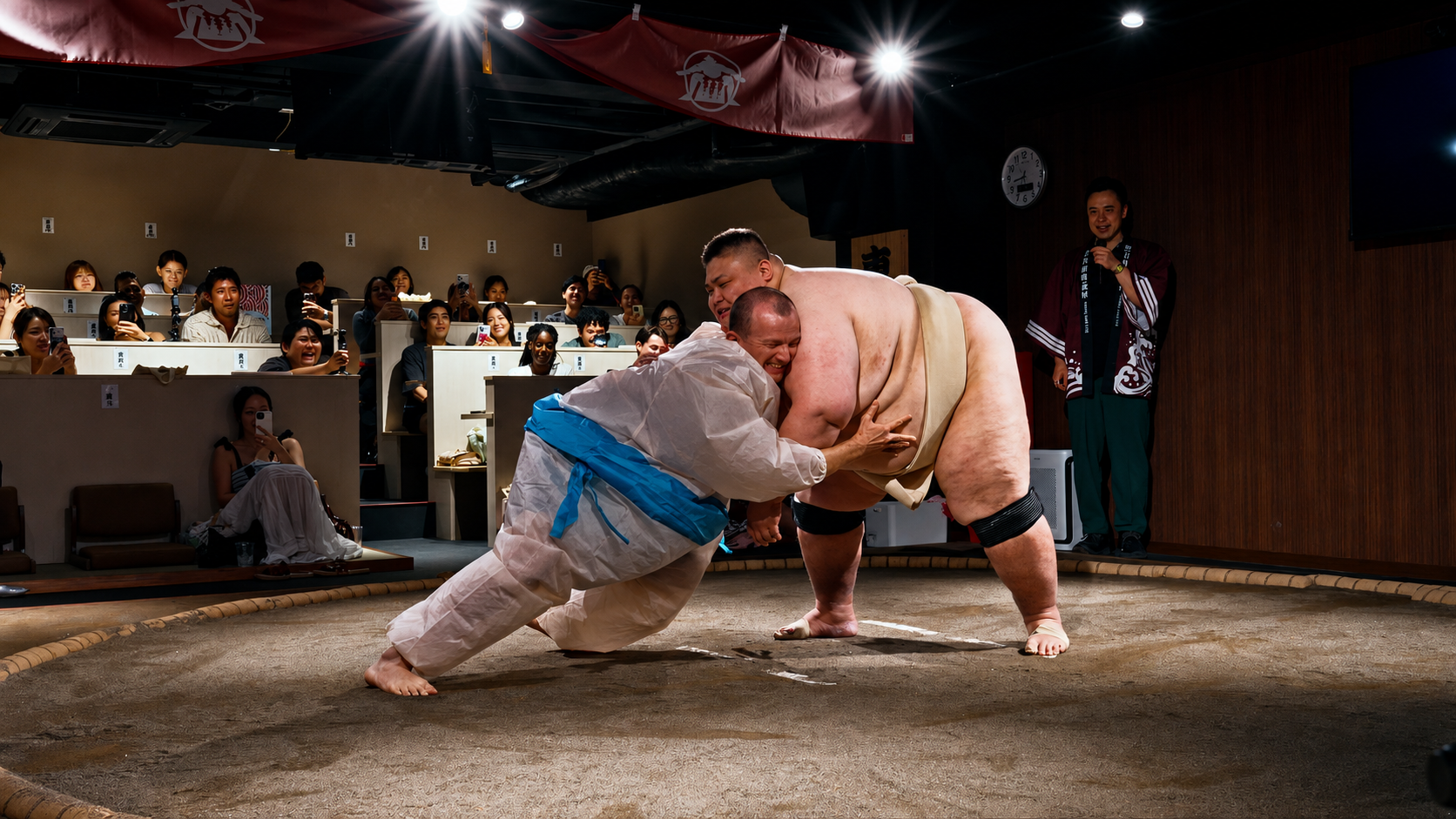
Morning Practice
Morning practice, called asageiko, lets you watch wrestlers train at a stable before the day starts. It's the least polished of the three options and the quietest. You watch from a viewing area, usually behind a guide who explains what's happening.
Details vary by stable and season, so read the tour page closely. Check the meeting time, the language of the guide and the stable's rules for photos and noise before you book.
Which One Should You Book?
- Visiting in January, May or September: Book a sumo show in case, while you try your luck with the tournaments.
- Visiting in any other month: book a sumo show. There's no tournament in Tokyo to compete with.
- Want to understand the rules as you watch: book a show with live English commentary.
- Early riser who likes behind-the-scenes looks: add a morning practice tour.
- Tournament sold out: book a show the same week. Seats are usually easier to find.
Conclusion
You don't have to pick one forever. Plenty of travelers book a tournament day when they can get one, then add a sumo show for the commentary and the ring challenge. If the dates don't line up, a show is the dependable answer to how to see sumo in Tokyo. Check live availability and reserve your seat.
Frequently Asked Questions
What is the best way to see sumo in Tokyo?
The best way to see sumo in Tokyo depends on your dates. Try for a grand tournament ticket if you visit in January, May or September, and book a sumo show in any other month. Add a morning practice tour if you like a quieter look at training.
Is a sumo show the same as a real sumo tournament?
No. Tournaments are official competitions between active ranked wrestlers, held in Tokyo only in January, May and September. Shows are year-round performances by retired wrestlers, with English explanations, audience participation and photos. For most visitors, a show is the easier and more interactive way to understand sumo.
How much are sumo tournament tickets?
Prices depend on the seat type and the day, from general arena seating to ringside boxes. The official Ticket Oosumo site lists the current options for each tournament. Check it on the sale date, because popular days and better seats go first.
Can I buy sumo tournament tickets on the day?
Sometimes. A limited number of same-day tickets are sold at the Kokugikan box office, and people line up before dawn to get one. Service there is in Japanese. If you want a reliable seat, buy in advance through the official site.
Is there sumo in Tokyo in March, July or November?
There are no Tokyo tournaments in those months. March tournaments are held in Osaka, July in Nagoya and November in Fukuoka. Sumo shows in Tokyo run year-round, so you can still see live bouts and learn the rules whatever month you visit.
Do sumo shows use real sumo wrestlers?
Yes, retired professional wrestlers perform at our shows. They demonstrate techniques, wrestle live bouts and take part in the Sumo Challenge. They're not currently ranked competitors, which is the main difference from a grand tournament. The bouts are real, and the host explains each ritual and technique in English as it happens.
Can I watch sumo practice without a tour?
Usually not. Most sumo stables do not accept walk-in visitors, so practice visits are arranged through a tour or directly with the stable. Read the tour details first, because rules for photos, noise and clothing differ between stables. Note the meeting time too, since practice happens early in the morning.
Which is better for first-timers, a show or a tournament?
A show is easier for first-timers because a host explains the rituals and rules as they happen. A tournament is the full experience but offers limited English commentary, so check what the venue provides and read a beginner's guide first. Many travelers book both if their dates allow.
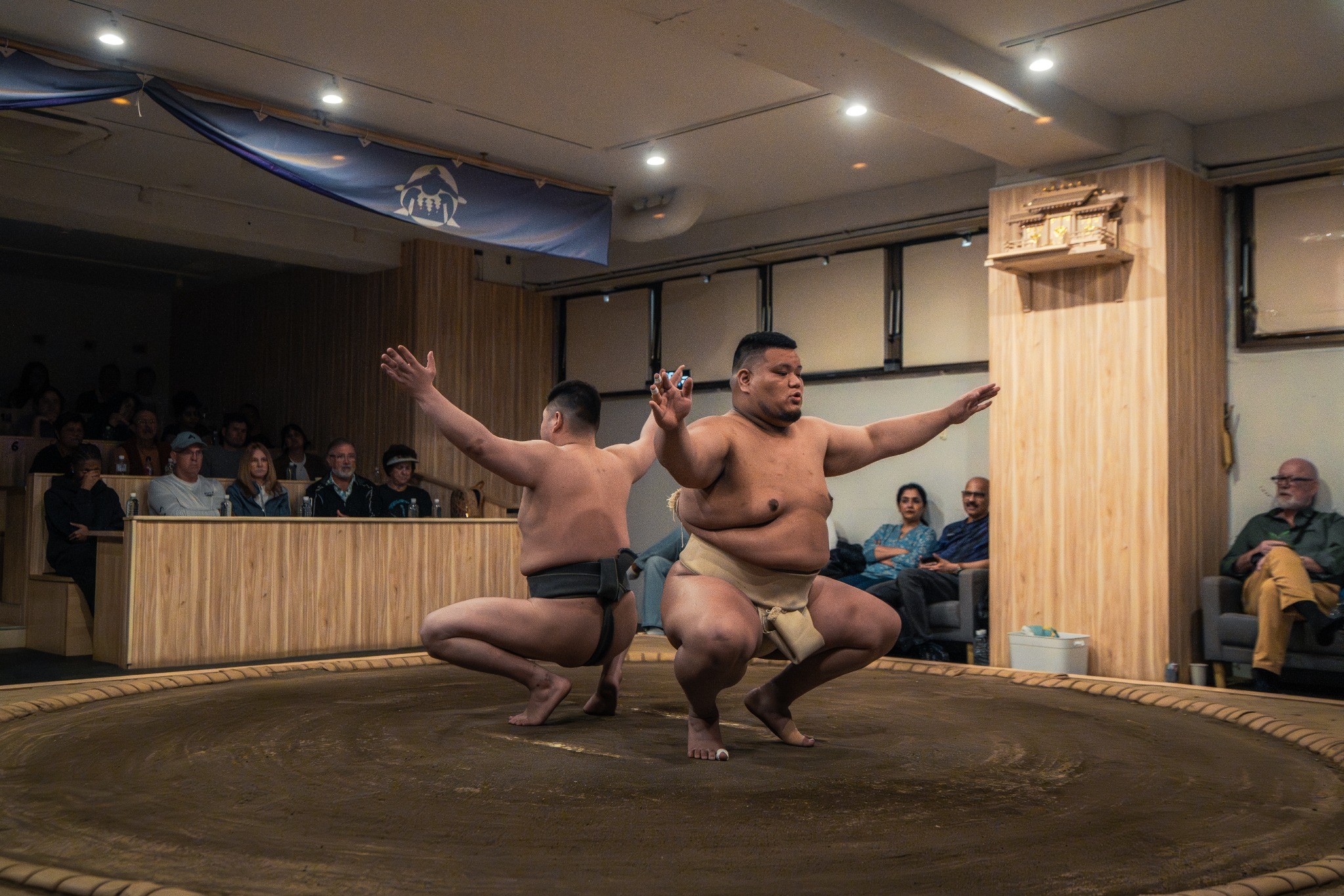
Venue and Booking Details
- Shinjuku Sumo Club: Sekisaku Building 2F, 2-5-22 Okubo, Shinjuku-ku, Tokyo · 9:30–22:30 (last entry 20:00) · near Shin-Okubo and Higashi-Shinjuku stations
- Shinjuku Kabukicho Sumo Club: K-SQUARE 1F, 1-8-4 Okubo, Shinjuku-ku, Tokyo · near Don Quijote Shinjuku
- Shibuya Sumo Club: Daiichi Silver Building, 5-20-11 Sendagaya, Shibuya-ku, Tokyo · 9:00–21:00
- Shows: about 90 minutes · hosted in English · same-day seats often available
- Book: travelingjapan.com/brands/sumo-show