
Honbasho vs Jungyo vs Sumo Show: What Is the Difference?
Short answer: A honbasho is an official Grand Tournament, one of six 15-day events a year, and the only kind whose results decide a wrestler's rank. A jungyo is a regional tour in which professional wrestlers travel to towns away from the tournament cities for a one-day exhibition. A sumo show is a demonstration designed to introduce the sport to visitors. Only the honbasho counts for the official ranking.
Visitors often use these three words as if they meant the same thing, then discover they have bought tickets for something different from what they pictured. This guide explains each, shows them side by side, and says how to choose. Facts are tied to the sources listed at the end.
In this guide
- What is a honbasho?
- What is a jungyo?
- What is a sumo show?
- Honbasho vs jungyo vs sumo show: side by side
- Which one should you choose?
- When is the next jungyo?
- Frequently asked questions
- Sources and notes
What Is a Honbasho?
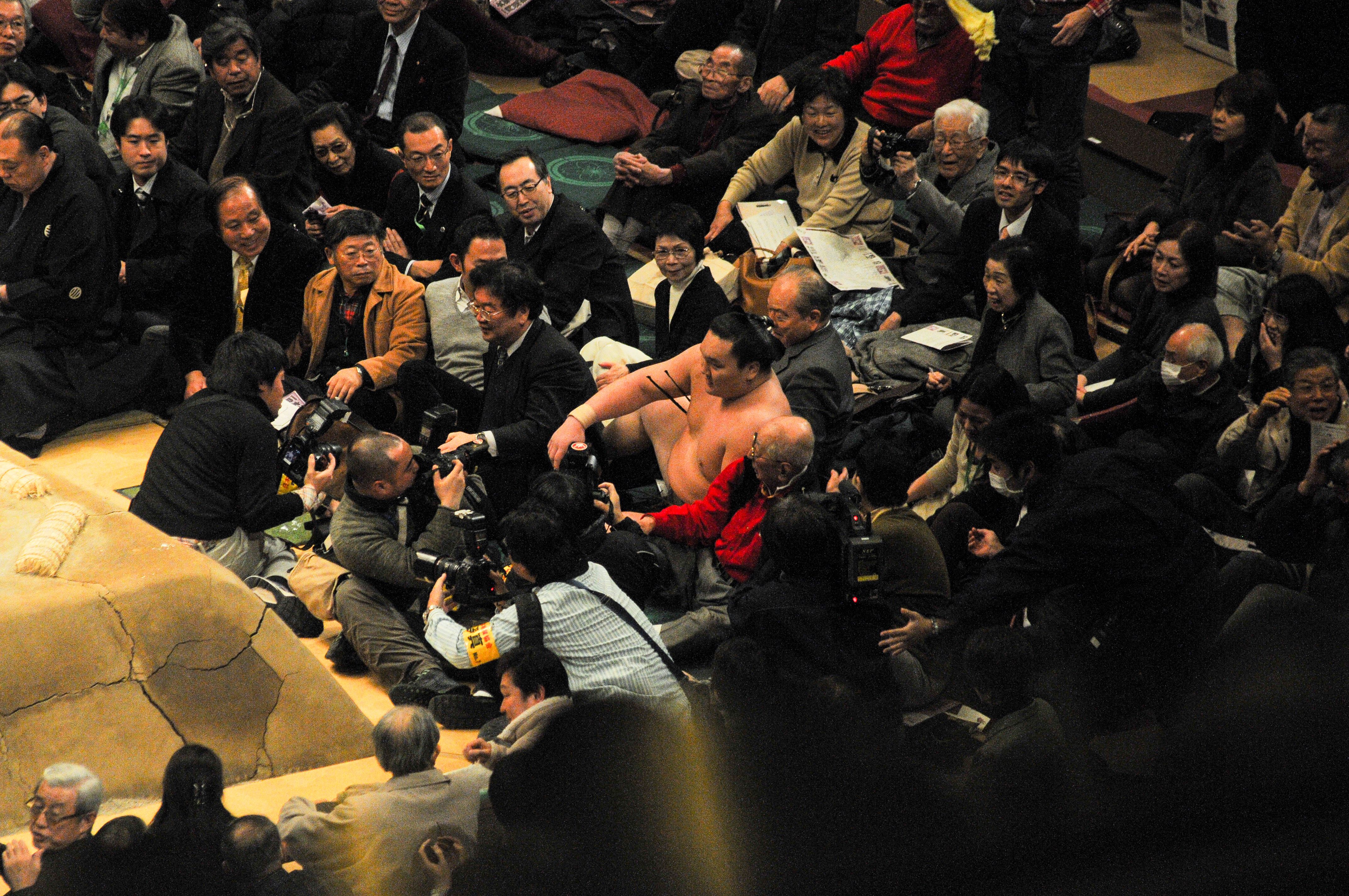
A honbasho (本場所) is an official professional sumo tournament. The name means "main" or "real" tournament, which distinguishes it from the unofficial events described below. According to Wikipedia's entry, only honbasho results determine promotion and relegation on the banzuke, the official ranking sheet.
The Japan Sumo Association (JSA) lists six honbasho each year, each lasting 15 days: three in Tokyo (January, May and September), one in Osaka (March), one in Nagoya (July) and one in Fukuoka (November).
Month | Name | City | Venue |
|---|---|---|---|
January | Hatsu Basho | Tokyo | Ryogoku Kokugikan |
March | Haru Basho (Osaka Basho) | Osaka | Osaka Prefectural Gymnasium |
May | Natsu Basho | Tokyo | Ryogoku Kokugikan |
July | Nagoya Basho | Nagoya | Aichi International Arena |
September | Aki Basho | Tokyo | Ryogoku Kokugikan |
November | Kyushu Basho | Fukuoka | Fukuoka Kokusai Center |
The following points from the JSA and Wikipedia define the experience:
- Makuuchi and juryo wrestlers fight once a day over the 15 days, each time against a different opponent. Lower divisions fight on seven days.
- The Emperor's Cup goes to the wrestler with the best record on the final day.
- Matches begin in the morning with the lowest ranks and build to the yokozuna bouts at the end of the day.
- The Ryogoku Kokugikan is owned by the JSA and is described by Wikipedia as the only venue set up for sumo year-round.
- Daily Sports reports that ticket prices for the Tokyo and Osaka tournaments are being raised, so check the JSA's official ticket information for current prices.
What Is a Jungyo?
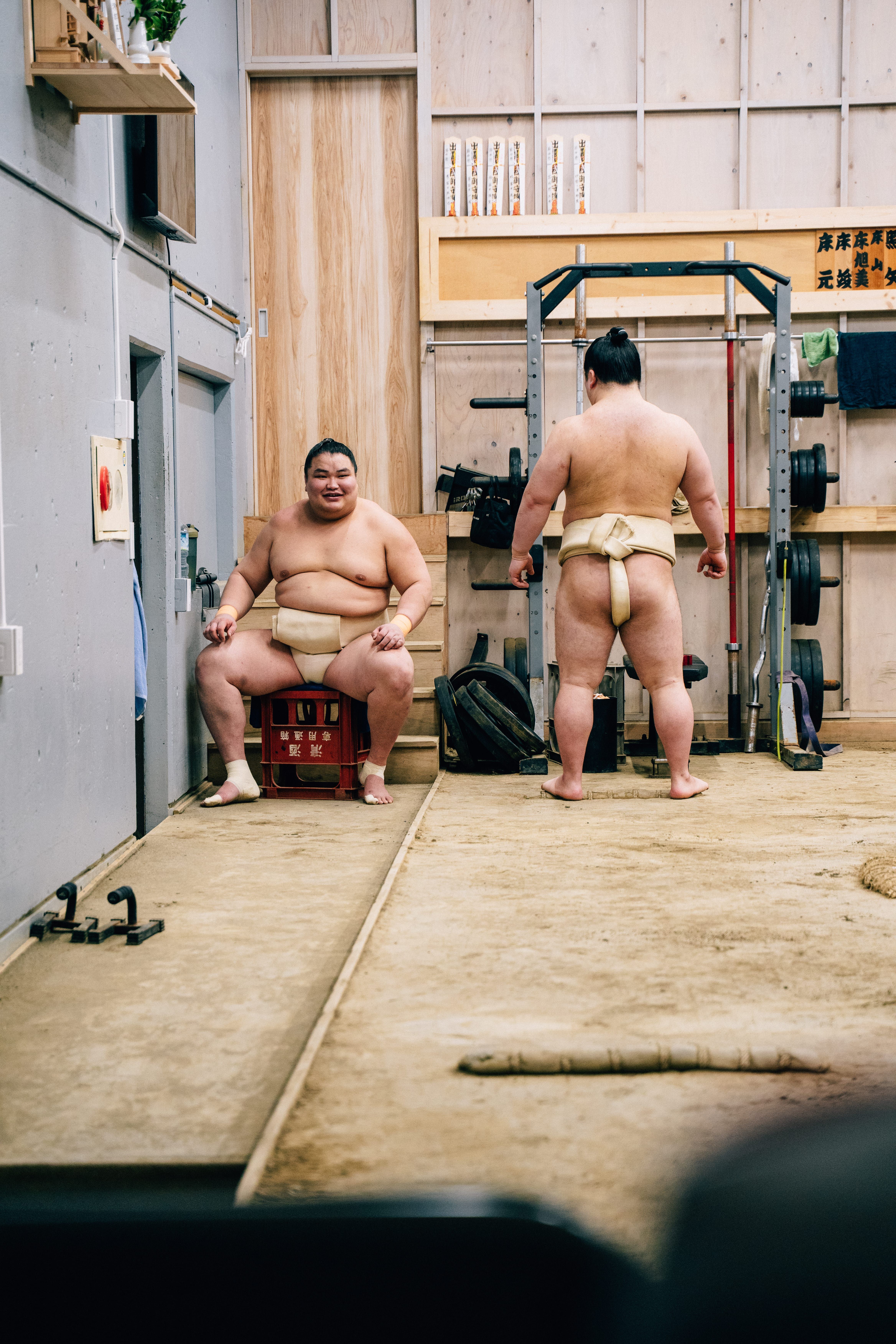
Jungyo (巡業) means "regional tour." Tachiai's introduction explains that it takes sumo to areas far from the honbasho cities so fans there can watch and meet well-known wrestlers.
How many. Four tours a year: spring (April), summer (August), autumn (October) and winter (December).
Who takes part. Sekitori (makuuchi and juryo wrestlers, apart from those on medical leave), usually with their attendants, plus ring announcers, referees and hairdressers. Tachiai counts about 270 people in total. The tours began in the Edo period, when each stable or group of stables ran its own.
What happens. The JSA's description of a typical day runs roughly like this:
Time | Event |
|---|---|
9:00 | Gates open, drum starts the event |
9:30 to 10:30 | Wrestlers train, lower divisions first, yokozuna last |
11:30 | Bouts begin with the lower divisions |
13:00 | Top-division ring-entering ceremony and the yokozuna's ring-entering ritual |
13:30 | Top-division bouts, ending with the final bout |
14:30 | Bow-twirling ceremony and close |
Between bouts there are demonstrations: hairdressing, rope-tying for the yokozuna, sumo folk songs (jinku), taiko drumming and shokkiri, a comic demonstration of techniques and banned moves that dates to the Edo period. Tachiai's description adds handshakes with the sekitori and "kiddie sumo" with local children. Times vary by stop.
Does it count? No. Wikipedia describes the unofficial tournaments held on tours between honbasho as hana-sumo ("flower sumo"). They may carry prize money, but a wrestler's performance does not affect his ranking.
Where. Local gymnasiums, temples or outdoor tents, with a prefabricated ring assembled for each event, according to Tachiai. Some stops are ceremonial tournaments in shrine grounds. The JSA's 2026 schedule lists examples at Ise Shrine and Yasukuni Shrine, labelled honozumo.
Access. The Japan Times describes tour events as perhaps the most accessible pro sumo events of 2025, with tickets often still available a day or two before and prices it estimates at 10 to 20 times cheaper than comparable seats at upcoming events in London and Paris.
Why do jungyo exist?
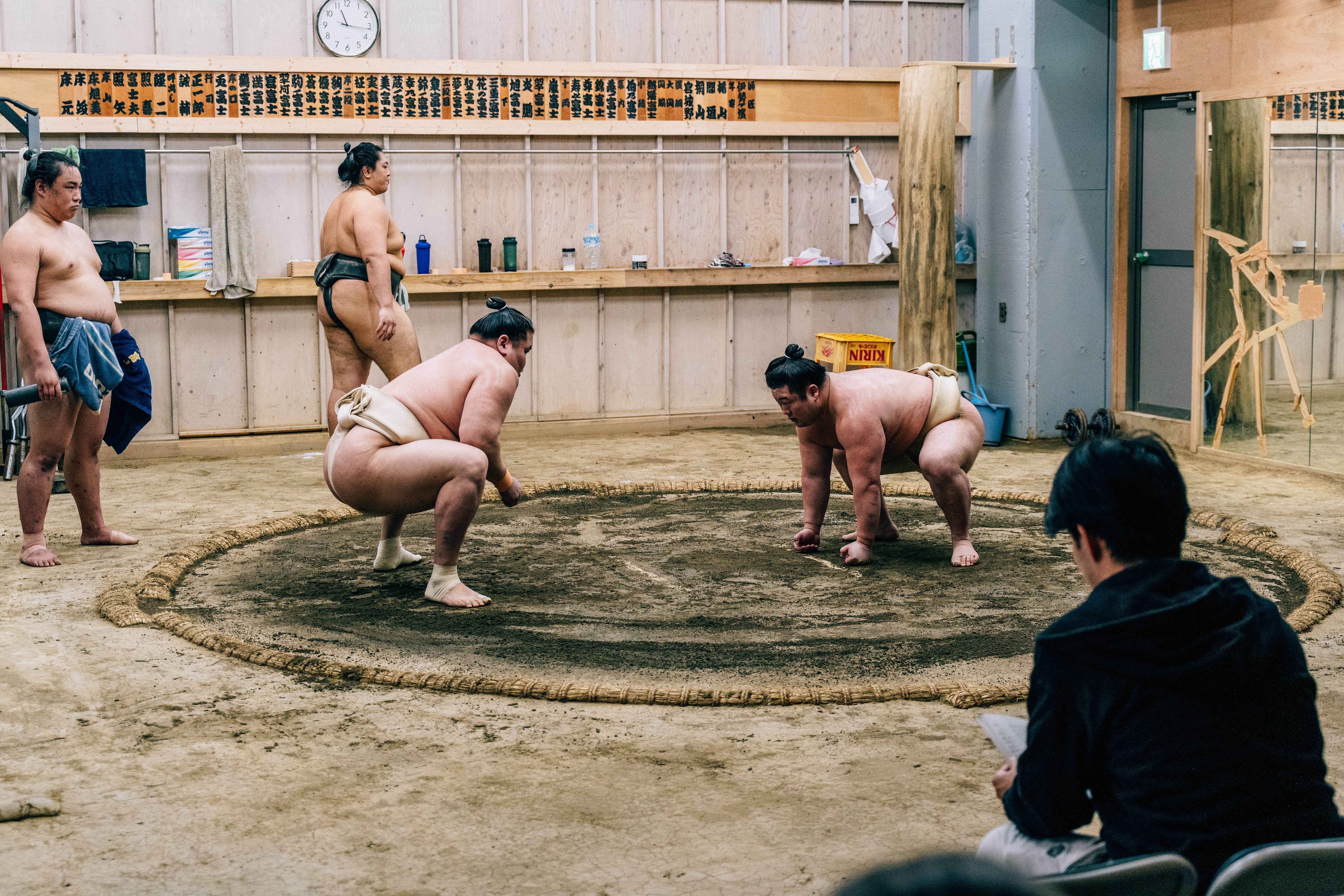
The tours are older than the modern tournament calendar, and they serve several purposes. The Japan Times describes them as a way for people in areas without official tournaments to see live sumo. In the past they also worked as scouting trips and recruiting tools. It notes that yokozuna Taiho was discovered on regional tours run by individual stables or by the JSA.
The tours are also a heavy part of a wrestler's working year. The Japan Times says wrestlers have very little free time and do sumo activities year-round, and calls the summer tour the most grueling for participants. For a visitor this is useful context: the people performing at a stop have often just come from, or are about to go to, a Grand Tournament.
What is honozumo?
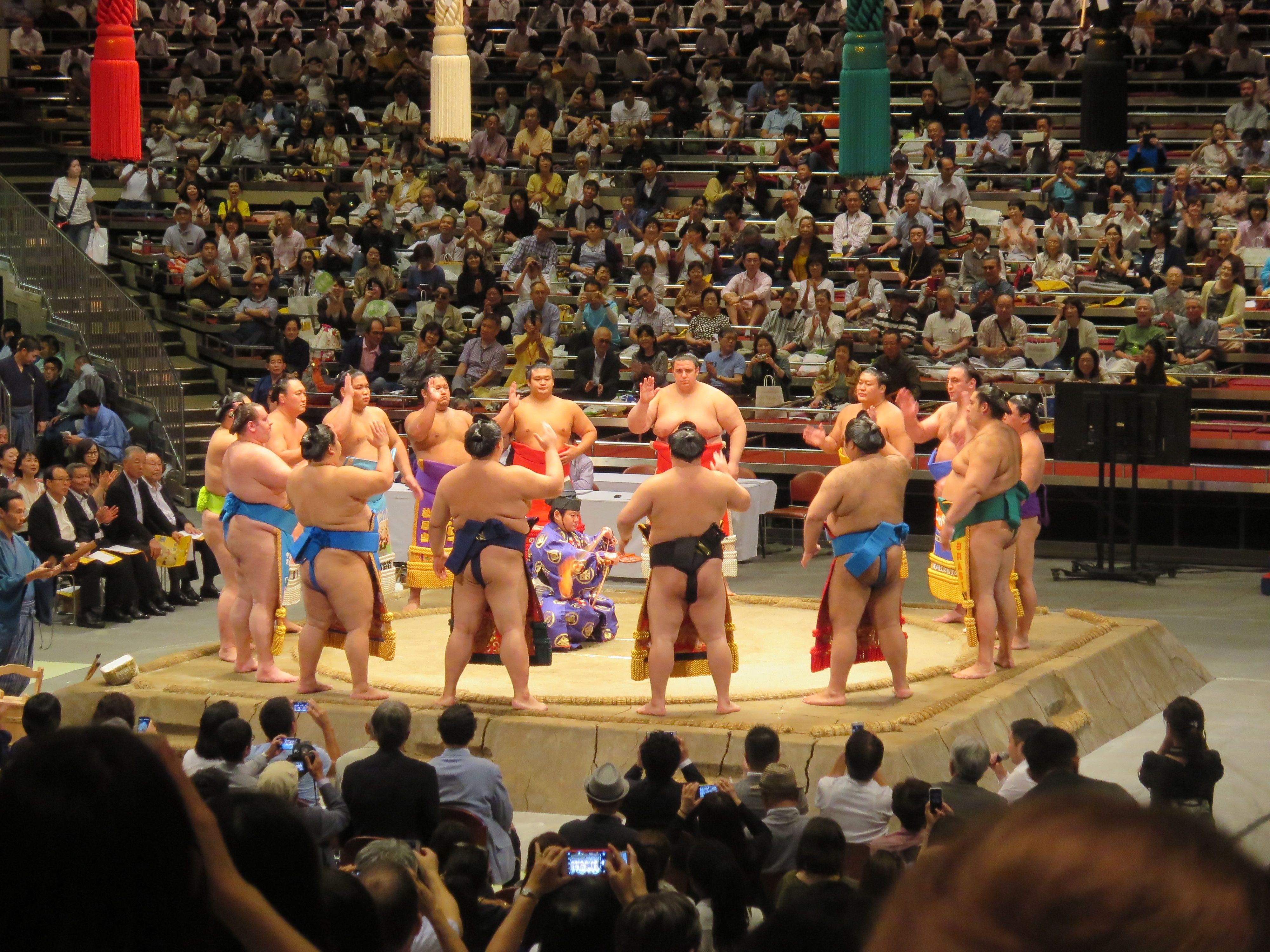
Some stops on the JSA's tour schedule are labelled honozumo. These are ceremonial tournaments held in shrine grounds, and the 2026 schedule lists Ise Shrine in Mie Prefecture on 29 March and Yasukuni Shrine in Tokyo on 13 April as examples. They sit alongside the ordinary one-day stops, so a tour mixes religious ceremony and public exhibition.
What Is a Sumo Show?
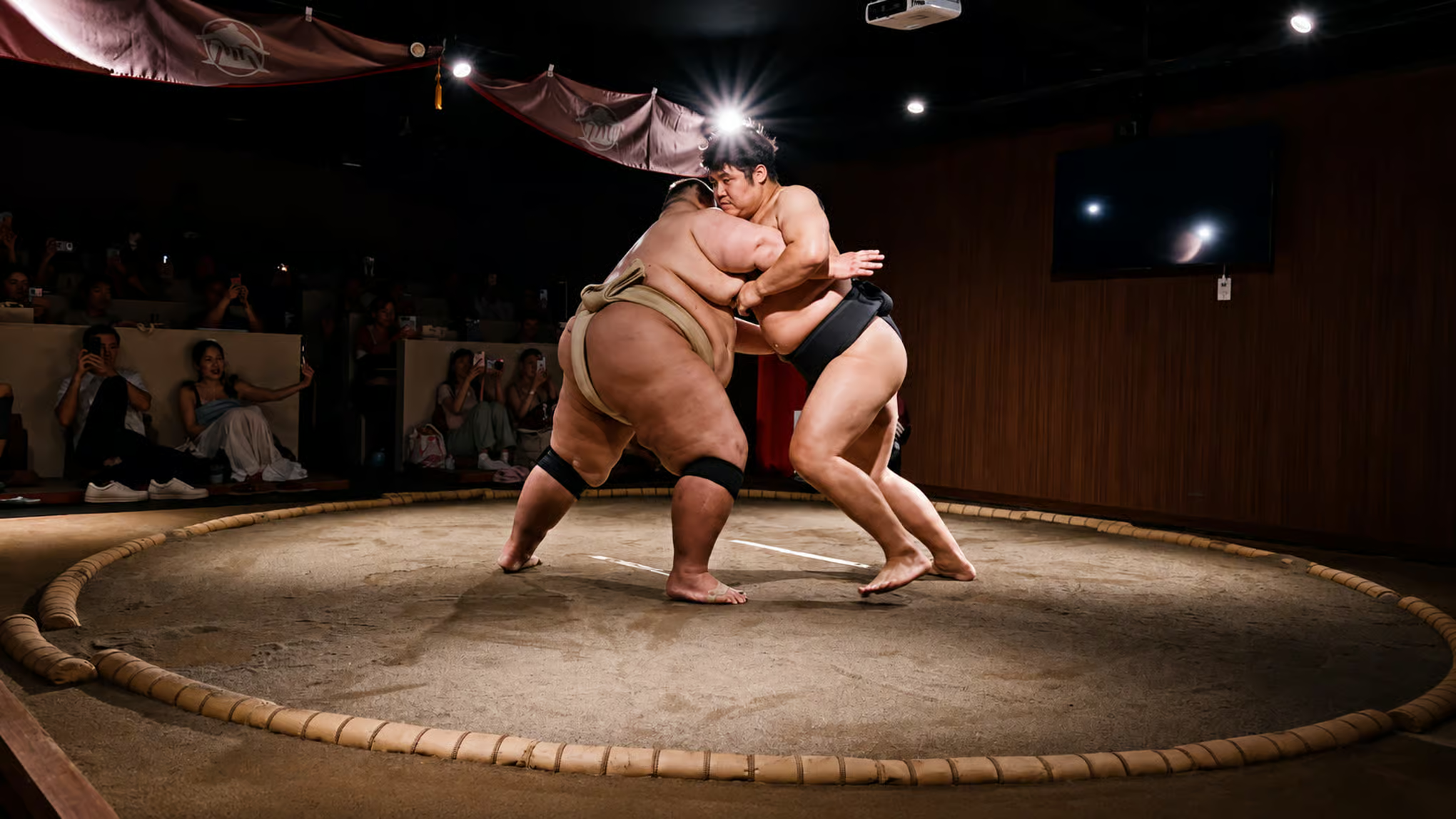
A sumo show is a different category again. It is a demonstration format aimed at visitors who have not seen sumo before, and it usually explains the sport as it goes. It is not one of the six honbasho and it is not a jungyo, and it does not take part in the official ranking.
The practical differences for a visitor are scheduling and access. A honbasho runs on fixed dates in six cities. A jungyo passes through a region on a set tour date. A sumo show is run by the venue, so the times, price and language are set by that venue and are worth checking on its booking page. Here is a list of live sumo shows in Tokyo, Kyoto and Osaka with their current schedules.
How Does a Honbasho Day Build?
A honbasho day is paced so that the importance of the bouts rises through the afternoon. The JSA's introduction says matches start in the morning with the lowest ranks and build toward the yokozuna bouts at the end of the day. Several rituals mark the structure:
- Ring-entering ceremony (dohyo-iri). Held before the makuuchi bouts, led by the yokozuna.
- Time limits. The JSA gives four minutes before the bout for makuuchi, three for juryo and almost none in the lowest divisions.
- Salt-throwing. Reserved for makuuchi, juryo and sometimes makushita.
- Bow-twirling ceremony (yumitori-shiki). It closes each day.
A honbasho is also where the ranking changes. A wrestler's main goal is a majority of wins, which in a 15-day tournament means eight, and the result feeds directly into the revised banzuke. This is the clearest difference between competition and exhibition.
Glossary: Terms You Will See on Tickets and Schedules
Term | Meaning |
|---|---|
Banzuke | The official ranking sheet, revised after each honbasho |
Dohyo | The clay ring, 6.7 m square and 60 cm high |
Dohyo-iri | Ring-entering ceremony before the top-division bouts |
Hana-sumo | Unofficial tournaments on tours that do not affect ranking (Wikipedia) |
Honozumo | Ceremonial tournaments held in shrine grounds, such as at Ise Shrine and Yasukuni Shrine (JSA tour schedule) |
Jinku | Traditional sumo folk songs sung by wrestlers |
Shokkiri | A comic demonstration of techniques and banned moves, dating to the Edo period |
Sekitori | Wrestlers in the juryo and makuuchi divisions |
Yumitori-shiki | The bow-twirling ceremony that ends the day |
Honbasho vs Jungyo vs Sumo Show: Side by Side
Honbasho | Jungyo | Sumo show | |
|---|---|---|---|
What it is | Official Grand Tournament | Regional exhibition tour | Demonstration for visitors |
How often | Six a year, 15 days each | Four tours a year, one-day stops | Set by the venue |
Counts for rank | Yes | No | No |
Where | Tokyo, Osaka, Nagoya, Fukuoka | Towns across Japan | City venues, set by the operator |
Who fights | All ranked divisions, in competition | Sekitori and others, in exhibition | Set by the operator |
Format | Full competitive tournament | Training, bouts, songs, comic demos | Explained introduction |
Best for | Seeing the sport in full | Seeing top wrestlers up close, locally | A first introduction with context |
Which One Should You Choose?
The choice follows from what you want to see and when you are in Japan.
- You want the sport at full strength. Attend a honbasho. The Tokyo tournaments are in January, May and September.
- You are travelling in April, August, October or December and are near a tour stop. The jungyo gives close access to the top wrestlers in a local setting, at lower ticket prices according to the Japan Times.
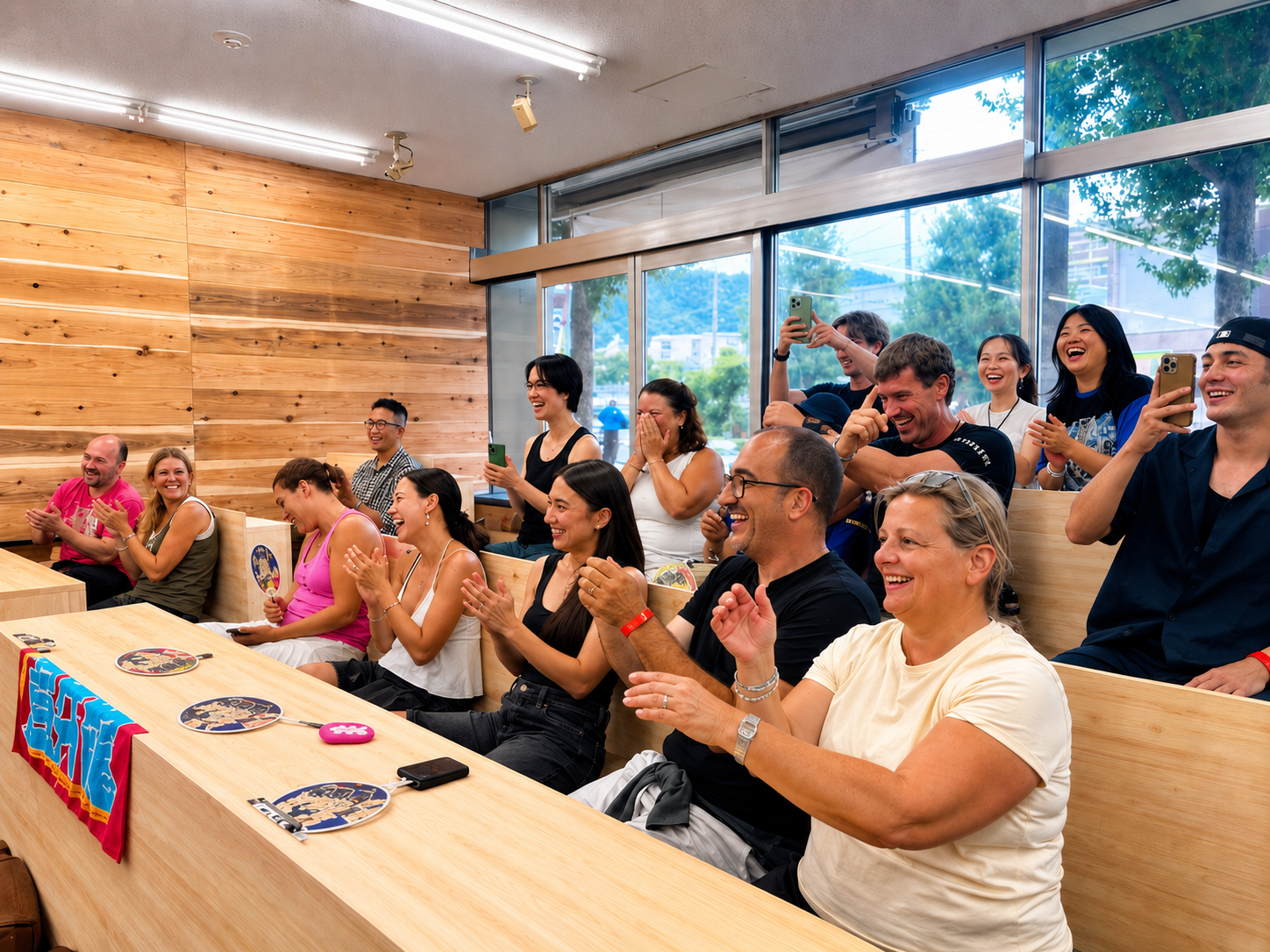
- It is your first sumo and you want it explained. A sumo show is the simplest route, and it does not depend on tournament dates.
One practical point: because only the honbasho affects rank, a result at a tour stop tells you little about the next banzuke, while a result in the Grand Tournament feeds directly into it. If you follow sumo results online after your visit, that is the event to follow.
The three are not alternatives so much as steps. Many visitors begin with a show to learn the rules, then buy tournament tickets once they know what to look for. For background, the guides on what a rikishi is and on how the ranks work explain the people and the hierarchy you will be watching.
When Is the Next Jungyo?
The JSA's 2026 schedule lists the winter tour as starting on 29 November in Amakusa, Kumamoto and running through 20 December. Stops in the Kanto area include Hiratsuka in Kanagawa on 15 December and Hasuda in Saitama on 16 December. The JSA page itself contains some typing errors and incomplete entries, so confirm the date and place on the JSA website before you travel.
The four 2026 tours, as listed on the JSA schedule page:
Tour | Dates | Where it travels |
|---|---|---|
Spring | 29 March to 26 April | Kansai, Chubu and Kanto, ending in the Tokyo area |
Summer | 2 to 30 August | Chubu, Tohoku and Kanto |
Autumn | 6 to 25 October | Kanto and Chubu through Kansai and the Chugoku region |
Winter | 29 November to 20 December | Kyushu, Chugoku, Kansai, Chubu, Kanto and Okinawa |
The spring, summer and autumn tours were marked as completed on the JSA page at the time of writing. Tachiai notes that tours begin in different regions in different years, so the pattern is a guide and not a rule.
Three Common Mix-Ups
"A jungyo is a smaller tournament." It is not a tournament in the official sense. Wikipedia calls the unofficial events on tours hana-sumo and says performance in them does not affect ranking. A honbasho is the only event that does.
"A sumo show and a honbasho show the same thing." They are different formats. The honbasho is competition with promotion and relegation at stake. A show is a demonstration built to introduce the sport, so the experience, the pacing and the explanations differ.
"Tickets are the same for all three." They are sold differently. Honbasho tickets follow the JSA's published prices, tour tickets are often still available a day or two ahead according to the Japan Times, and show tickets are set by the operator of the venue.
Frequently Asked Questions
What does honbasho mean?
Honbasho (本場所) means "main tournament." It is an official Grand Tournament, and only honbasho results determine promotion and relegation on the banzuke, according to Wikipedia.
What is a jungyo in sumo?
Jungyo (巡業) means "regional tour." Wrestlers travel to towns away from the six honbasho cities for one-day exhibition events, four times a year, according to Tachiai.
Do jungyo results count for rank?
No. Wikipedia describes the unofficial tournaments held on tours as hana-sumo, and says a wrestler's performance in them does not affect his ranking.
How many Grand Tournaments are there?
Six a year, each 15 days: January, May and September in Tokyo, March in Osaka, July in Nagoya and November in Fukuoka, according to the JSA.
Is a sumo show the same as a tournament?
No. A sumo show is a demonstration format for visitors. It is not an official tournament and does not affect a wrestler's rank.
Which is cheapest to attend?
The Japan Times reports that tour tickets are often still available a day or two before the event and are roughly 10 to 20 times cheaper than comparable seats at upcoming events in London and Paris. For a show, prices are set by the venue.
When is the next jungyo?
The JSA lists the 2026 winter tour from 29 November to 20 December, including Hiratsuka (15 December) and Hasuda (16 December). Check the JSA site, as the page has some errors.
Sources
- Japan Sumo Association. Sumo: An Introduction (English PDF). https://www.sumo.or.jp/pdf/en/sumo_introduction.pdf (tournaments, 15-day format, bouts per day)
- Japan Sumo Association. "A Day at Jungyo (Provincial Tour)." https://sumo.or.jp/EnJungyo/aday/ (typical schedule, demonstrations, tour months)
- Japan Sumo Association. "2026 Tour Schedule." https://sumo.or.jp/EnJungyo/schedule/ (2026 tours, honozumo at shrines)
- Wikipedia. "Honbasho." https://en.wikipedia.org/wiki/Honbasho (definition, ranking, hana-sumo, venues; secondary source)
- Tachiai. "Introduction to the Jungyo," 26 July 2018. https://tachiai.org/2018/07/26/introduction-to-the-jungyo/ (tour structure, participants, differences from honbasho)
- The Japan Times. "Sumo regional tours," 16 April 2025. https://www.japantimes.co.jp/sports/2025/04/16/sumo/sumo-regional-tours (access, price comparison)
- Daily Sports Online, 31 July 2026. https://www.daily.co.jp/general/2026/07/31/0020651972.shtml (ticket price revision for Tokyo and Osaka)